













English
- English
- Español

- 简体中文

- Français

- Deutsch

- Italiano

- 日本語

- 한국어

- Portuguese, International



A definitive guide to technology platforms in multilevel marketing

Running an MLM or direct selling business in the United States comes with a lot of opportunities for you to grow and succeed. But it also comes with its fair share of challenges like strict regulations and greater consumer expectations. Whether you are just beginning your MLM business or growing an existing network, selecting the appropriate MLM software is one of the most important decisions you'll make.
This guide will take you through all the important features to look for in an MLM software platform, designed specifically for operations in the US. The key areas like legal compliance, tax management, compensation plans, distributor management, and data security will be covered. With this guide, you'll be well-prepared to face the complexities of the American market, keep your distributors motivated, and ensure your customers are always satisfied.
Let’s dwell deeper into the intricacies and innovations related to MLM software and how it is transforming network marketing businesses.
So, the first question,
MLM or multi-level marketing software is a technology platform that empowers MLM organizations with innovative solutions to address the challenges they face in their network marketing business. MLM software simplifies and automates complex MLM processes like compensation plan management, commission management, lead generation and distributor training.
MLM is a business that is vast and requires extensive resources to handle.
MLM software platform takes the burden off the organization’s shoulders by simplifying a whole bunch of tasks that otherwise would be strenuous for administrators—right from onboarding distributors and customers to long-term retention.
The real ROI of MLM software cannot be derived as a single amount because it comes from different sources. Some offer quick revenue through automation, faster payouts, and reduced operational costs and some others promise long-term growth through better distributor retention, compliance, scalability, and improved decision making.

MLM companies must measure the expenses of not having a proper MLM system before measuring the returns. Those operating on generic ERP systems, spreadsheets, or traditional tools spend more than they expect. The biggest hidden cost and risk is commission error. Manual or poorly configured commission systems produce an average overpayment error rate of about 2.5% of total payout volume caused by fake or inactive accounts, incorrect compression logic, and misapplied qualification rules.
An MLM company paying $500,000 per month in commissions might be paying $12,500 per month in overpayments, but this will be visible only in a quarterly audit. The impact caused by underpayments is not less critical, it can damage distributor trust, increase churn rates and disputes.
The second hidden cost for MLM companies using traditional systems is administrative expenses. Payouts, onboarding, and rank advancements cost companies time, money, and manual labor which is not a part of software ROI calculation. When organizations analyze this carefully, it could amount to 15-30 hours of administrative work per payout cycle. On the financial side, this can weigh heavily on the company’s operational costs.
The ROI calculation of an MLM software has two separate timelines to consider, immediate and compounding.
Immediate returns are seen along the operational side where companies experience improvements in commission accuracy, decline in payout disputes, reduced admin time, and smoother onboarding. Companies can measure this quickly and this justifies the software purchase internally
The effect of compounding returns is structural and larger but takes time to manifest. The most important is distributor retention. This is often underestimated by companies but distributor attrition is not a short-term revenue problem, it is a lifetime value problem. When a company loses a distributor, it loses their current contribution, future projected revenue, plus an additional expense of acquiring and onboarding a replacement. In network marketing, when a distributor with a downline network quits, it impacts the revenue contribution of the entire network.
A Bain & Company research shows that increasing customer retention rates by 5% increases profits by 25% to 95% and in MLM this means retained distributors continue generating sales, recruiting new members, and expanding network over time.
MLM software helps companies in improving retention rates by reducing commission errors, delayed payouts, and poor effort recognition. Most MLM platforms have features that can address these concerns like commission tracking, automated payouts, real-time rank updates, and loyalty programs that acknowledge every minor distributor contribution.
The impact multiplies when the team grows larger. If a company using MLM software has 5000 distributors and grows 25% faster, it gets an additional salesforce count of 1250. Those new distributors generate sales and recruit others, and this compounding effect increases revenue and network volume over time.
ROI is balanced by factors such as accuracy in commission calculations, distributor retention rates, onboarding automation, administrative expenses, and revenue enablement strategies. Organizations must understand which lever influence ROI most to plan implementation strategies.
Commission errors directly affect revenue and distributor trust. Automated MLM software removes the risk of overpayments and underpayments caused by incorrect calculations. Payout accuracy is something that impacts every payout cycle and hence with an MLM software businesses can recover software costs within the first year through reduced leakages and disputes.
Better retention rates create compounding growth in revenue over time. When distributors stay active, it improves repeated purchases, team expansion, and recurring commissions. MLM software features like transparent dashboards, accurate earnings visibility, AI-powered training systems, and engagement tools can improve distributor confidence and reduce churn rates. The impact of an MLM software on distributor retention can only be seen after 6-12 months, but this is one of the largest ROI contributors.
The first 90 days in a distributor’s direct selling journey is the high-risk period for attrition. Automated onboarding systems can make registration, training, and KYC verification easier. Real-time support for new distributors can help them stay active from their initial days itself and can reduce early dropouts.
Manually verifying payouts, ranks, compliance, and managing large distributor networks takes time and resources. But an AI-powered MLM software can automate repetitive administrative tasks and reduce dependencies on manual reconciliation and intervention for processes like compliance and payout monitoring. This will help the operations team to concentrate more on growth, distributor support, and network performance.
Features like replicated websites, mobile apps, ecommerce integration, and social selling tools make it easier for distributors to sell and recruit faster. When customers’ shopping experience becomes smooth, order frequency and distributor productivity increases too. But this ROI aspect is a bit difficult to measure. It is seen through higher order numbers, better customer conversion rates, and increase in the number of active distributors.
For an MLM software implementation to be successful, there are a few things companies must monitor. Some companies rush through the implementation process without properly setting up their compensation plan. This can cause errors and disputes. When users are reluctant to use the platform, ROI decreases because only when distributors and admins use the platform the processes and outcomes improve. If the back-office is confusing or the mobile apps do not perform well, users go back to manual methods and this reduces the value automation can provide.
Companies must not treat software purchases as a one-time set up. When compensation plan changes or new distributors join, the system must also be reconfigured to adapt to the changes, else it results in ROI decline.
The ROI of an MLM software must be measured using a practical business model.
Step 1: Calculate commission leakages happening currently within your existing system or take your monthly commission payout volume and multiply it with 2.5%. That is your approximate overpayment total.
Step 2: Calculate your distributor lifetime value. You must know how much an average distributor contributes toward your company revenue to know the financial impact of distributor churn. Average active distributor's monthly contribution × average tenure in months will also give your distributor’s lifetime value.
Step 3: Calculate your administrative hours by identifying every manual task in payout, onboarding, compliance monitoring, and rank calculations. Convert these hours into operational cost and you will know how much automation can save.
Step 4: Test retention improvement by considering a 10% retention improvement to your churn count and multiply by distributor lifetime value. Even if it is half of the industry average improvement, the number is larger than the entire software cost.
Step 5: Compare the Total Cost of Ownership including software licensing, implementation, training, support, and maintenance because the actual Total Cost of Ownership (TCO) of enterprise MLM software is usually 30–40% higher than the quoted licence fee. So, to know the exact ROI, you must consider everything not only the software price.
Do you wish to calculate ROI against your own network size, payout volume, and compensation plan?
Epixel MLM Software’s ROI calculator can tell you how the platform can impact your business productivity and profits.
The United States is one of the largest direct selling markets and also the most regulated. In 2024 alone, the direct selling industry generated an annual retail sales revenue of $34.7 billion with 34.3 million preferred customers and discount buyers. The retail sales revenue of the global direct selling industry, as reported by WFDSA, was $163.9 billion with 104.3 million direct sellers, of which 72.1% are female.
As of 2026, most MLM companies operate within a strict environment created by FTC and other state-level consumer protection laws. Authorities including FTC have increased scrutiny on income claims made by distributors and Income Disclosure Statement (IDS) released by companies. In 2024, FTC reviewed about 70 IDS from different direct selling companies and found that most participants in the reviewed MLM companies earned $1000 or less annually excluding the expenses. In 17 out of 70 companies, most participants did not earn any income at all. The analysis also identified discrepancies by some companies who excluded distributors with low or zero income.
In addition to this, legal developments around granting direct sellers independent contractor status and labor policies require MLM companies to maintain proper distributor agreements, onboarding and training processes, and compliance moderation. US states such as California and Illinois have also introduced strong consumer protection and anti-pyramid scheme regulations recently. Hence, region-specific compliance management, tax handling, refund processing, and audit-ready reporting capabilities have become core features in MLM software developed for the US market.
This increased scrutiny has made compliance-ready MLM software a necessity for companies operating in the US.
Key areas to focus:
Accurate income disclosure statements are mandatory to avoid misleading claims.
A clear buyback and refund policy keeps you transparent and consumer friendly.
Each state has different consumer protection laws, which makes it essential for your software to have robust region-specific compliance management features including monitoring distributor communications, promotions, and marketing activities.
AI is making MLM businesses more productive and efficient, and contributes to the growth of the direct selling industry. As of 2026, 26% MLM companies have already adopted AI-powered tools to improve operations, distributor engagement, and decision making. Businesses using AI-powered compensation plan management systems report up to 80% fewer payment errors and a 21% improvement in payout accuracy and companies adopting AI-powered MLM platforms also see about 20% higher distributor retention rates.
This AI application can help businesses forecast sales, profits, and distributor attrition rates so that they can plan and optimize strategies for network growth and stability. AI systems analyze prospect behavior, engagement patterns, and sales conversions to identify leads that would possibly convert and help distributors focus on their efforts more effectively.
AI-powered dashboards offer a personalized overview of distributor earnings, rank progress, and team performance. It can notify distributors on high priority tasks, provide recommendations, and performance insights based on a user’s role and activity.
AI can detect risks, threats, and fraud like irregular commission structures, duplicate accounts, suspicious transaction activity, or unusual payout patterns before they become serious legal or operational problems for the business. Compliance and Fraud detection AI through strict enforcement procedures brings compliance and security under control.
Social selling is also improving with AI-powered tools and strategies. Around 71% of MLM representatives consider AI-powered social media marketing tools to be the most effective lead generation method. Sales AI platform with social selling capabilities help distributors optimize content timing, audience targeting, customer engagement, and follow-up communication across social platforms.
An exclusive AI system for marketing helps distributor teams launch and manage campaigns across all marketing channels. Marketing AI system generates quality leads and allows businesses to optimize marketing activities with an insightful dashboard that offers detailed performance of each channel.
Companies that are focusing on ethical recruitment practices must have an AI-powered recruitment system that personalizes the whole recruitment process. Recruiting AI systems with features such as AI-powered prospect finder and structured prospect follow-up help bring talented members into the network through a compliant recruitment process.
MLM Software that comes with in-built Customer AI systems helps in strengthening customer-brand relationships with response automation and real-time distributor support. These systems also have strong analytics system that make personalized recommendations and alerts teams on churn risks.
Just as vast as the business is, the software too is conceptualized with complexity in mind. It doesn’t just serve one part of the business but encompasses all possible areas that include distributors, commissions, bonuses, ecommerce, shipping, security, etc.
MLM software platforms integrate various MLM compensation plans, remodeling them to best fit the needs of the business.
Most MLM software platforms are customizable and MLM organizations can choose their package from the list of available features that are in compliance with their business requirements.
Here are the most common features that come integrated with standard MLM software.
The way how businesses are structured in multilevel marketing, MLM compensation plans have a good role to play in the making. A specific MLM compensation plan once adopted can be remolded to suit a business requirement based on their expected profitability ratio.
Keeping a check on the compensation plan regularly helps MLM organizations detect any defects that may hinder the course of their business.
Common compensation plans in MLM are

Two legged plan where each member can have only two direct downlines. Commissions are paid based on weaker leg sales volume. Binary plan fosters teamwork and encourages balanced growth.

The plan with a fixed structure allows members to sponsor only limited number of downlines on a fixed length and width. Matrix MLM plan encourages collaboration and maximizes earnings.

The plan allows members to expand their network only on a single frontline level. All the downlines are limitlessly placed in one level under each sponsor. Unilevel MLM plan has a simplified structure that ensures easy management and transparency within the network.

This MLM compensation structure emphasizes leadership development and distributor growth through rank advancements. Once the distributors achieve the set rank, they can break away from their upline and form their own independent teams direclty under the admin.

In a party MLM plan, consultants host product parties to demonstrate and sell products directly to consumers. This creates a social and interactive environment fostering product engagement for both sellers and buyers.

Members are placed on a board like structure, the length and width of which is determined by the company. Once a distributor fills a board, they get a higher position on the next board leading to higher commissions and rank advancements.

Members are placed in different levels known as generations. Each generation consists of both customers and distributors. Mostly beneficial to ecommerce businesses, the generation MLM plan offer distributors retail profits for both customer and distributor purchase.

Downline members are placed in a single vertical line structure with unlimited levels. Also known as single leg plan and linear plan, monoline MLM plan is simple to understand and easy to earn.
The beauty of an MLM software is that a single software can be restructured to any compensation plan anytime during the course of your business journey. There is no need for repurchase.
In the United States, the standard models are unilevel, binary, matrix, or hybrid compensation models. Since your business plan or perhaps the law will change over time, you want a system that makes it easy to make quick changes in your plan. Here's what to look for:

Drag-and-drop or configurable commission plan builders.
Multi-layered bonus and rank structures that allow differentiation among new reps, mid-tier leaders, and top earners.
Easily adding new product lines or promotions without needing to rebuild your entire plan.
American distributors expect timely and accurate payouts. Real-time tracking of commissions promotes trust and encourages them to continue working with your brand. The most important features include:
Instant commission statements in each distributor’s back office.
Automatic checks for qualification to bonuses or rank advancements.
Flexible payout options (direct deposit, checks, PayPal, etc.).
Ensure an error-free compensation process with faster payouts and fewer distributor disputes with an AI-powered Compensation System.
Request Free Demo
When there is no doubt that MLM software eases the task of a distributor to manage their business and customers, it also helps them enhance their skills with training and self-development modules.
The MLM platform can be structured to deliver distributor tasks, set goals for them, and train them on each of their skills eventually making them good sales leaders in the marketplace.
Distributor engagement and customer loyalty are driven by effective and timely communication. Consider features that can keep you up to date on CAN-SPAM and Telephone Consumer Protection Act (TCPA) compliance:
Integrated email marketing, including segment-based targeting.
SMS, email, or push notifications via mobile app for communicating critical information or promotional offers, if there is consent in place.
Automated notifications about new products, promotions, or compliance matters.
WhatsApp Business API integration.
AI chatbot for 24/7 distributor support.
Enable your distributors with a convenient back office providing the following functionalities:
Real-time commission summaries and rank progression.
Access to training modules, such as product knowledge, business ethics, and marketing strategies.
Genealogy or downline visualization, so they can monitor the performance of their teams and identify areas where they can improve.
Distributors who can immediately see what their earnings and sales metrics tend to stay motivated and active.
Commissions and bonuses are the nuts and bolts of every network marketing business. An MLM software ensures that this is properly greased and maintained in good shape.
MLM organizations can create, modify or manage commissions and bonuses according to the plans they choose. They can either choose an MLM software that comes integrated with an MLM commission calculator or integrate it into their existing platform to ensure real-time accurate payouts to their distributors.
MLM platforms come with features for all user roles, be it admin, distributor, or customer. One software fits all. The back office features are set for different user roles through alternative log-in options.
Designed for the purpose of each user role, these technology platforms customize themselves to meet the requirements of individual users.
Your MLM software vendor should provide individualized support for configuration and problem resolution, preferably from US based teams who are aware of the local rules and business etiquettes. Check for the following:
Individualized account management by industry experts.
Video instructions and step-by-step tutorials for setting up compensation plans and tax rules and to manage inventory.
A solid help desk or ticketing system to ensure accurate and prompt responses.
Training AI systems improve distributor retention rates by 18% through personalized support and learning paths. The success of distributors is completely dependent upon persistent learning. But companies must also provide advanced training systems for today’s digital-savvy distributors. Stats point to the fact that 52% of distributors now prefer mobile-based technology-driven MLM software.
An advanced MLM software can significantly contribute to this through:
On-demand video libraries based on product knowledge, sales strategies, and compliance dos and don’ts.
VR and AR-based training modules for product demonstrations.
Mobile-based training methods for on-the-go learning.
Built-in quizzes or certification paths to accurately measure distributor understanding.
Automated reminders of when training must be completed to ensure new recruits get up to speed quickly.
Enhance distributor engagement and productivity with AI-powered tools for faster conversion and network expansion.
Get Free Demo
The part and parcel of every business, an online store ensures the successful establishment of businesses beyond borders. It makes sure that the success of a business is not location-dependent.
MLM software platforms come with an integrated ecommerce module from where entrepreneurs and distributors can manage their online store and inventory. It also allows businesses to integrate popular platforms such as Shopify, WooCommerce, Magento, etc to build their own estore.
Instagram Shops, TikTok Shop, and Facebook Shop direct integrations are more like mandatory features of an MLM ecommerce system. An ecommerce MLM system where distributors can sell directly through social channels using their network and customers purchase without leaving the social media application is a core feature in Commerce AI that reveals the capability of advanced MLM systems. Live shopping and video commerce integration are also emerging capabilities in an ecommerce-driven MLM software.
Shipping logistics can become complex in a large country like the United States. Your MLM software should integrate with domestic carriers such as USPS, UPS, and FedEx, offering:
Real-time shipping quotes and delivery estimates at checkout.
Automated order tracking and email updates for customers.
Warehouse and fulfilment center management, especially if you operate multiple distribution points.
Recurring billing models are common in MLM, especially for consumable products (health supplements, weight management products, skincare items, etc.). To stay aligned with US consumer protection laws:
Set flexible subscription intervals (monthly, bimonthly, quarterly, etc.).
Provide easy cancellation and refund options, notifying customers of upcoming charges.
Automate shipment reminders to reduce missed deliveries and chargebacks.
Real-time inventory management helps you avoid overselling and maintain proper stock levels. Key capabilities to look for include:
Multi-warehouse support if you store products in different locations.
Auto-updates when items go out of stock.
Comprehensive return management to handle restocks or replacements.
MLM software platforms equip distributors with a bundle of advanced promotional tools that could be leveraged to sharpen their odds of success in the marketplace. Some of the common tools that come with standard MLM software include

Referral links

Ad banners

Promotional landing pages
Omnichannel publishing
Distributors can download sales reports, downline reports, performance reports, etc in the formats of their choice. These reports help them self-evaluate their performance as well as their downline teams.
Report generation can be done on every minute detail of the MLM business such as payout reports, commission statements, rank history, plan-specific reports such as carry forward history, left leg sales, right leg sales, etc. They can also set preferences to automatically generate reports for a specified time period with the specified filtering criteria.
Business admin can directly assess the performance of individual distributors and provide them with personalized training modules. A well-equipped MLM software comes with a set of e-learning modules and materials for your distributors including basic training, learning, and certifications. These modules can be sent to them within the MLM platform itself.
Most MLM software comes with a distributor media center where they can access training videos, brochures, product catalogs, flyers, and other business plan presentations. An easily accessible content management system can help them with the information they need to enhance their skills.
It’s quite a lot of work when it comes to the business admin. Managing the whole business with its complexities is no easy task. With so much weight to the role, the admin must have a customizable and user-friendly interface in place for the smooth running of business operations.
An MLM software gives admins the sole proprietorship to manage the business with the software. Admin has the right to edit, change or delete any information on the MLM platform such as website information, member information, package management, report generation, etc. The business admin can also restructure the compensation plans and modify commissions and payouts.
Admin can also generate revenue or turnover reports, distributor reports, sales reports, etc to suit their purpose. These reports can be downloaded in various formats with various filtering options.
Data protection laws in the US differ, but CCPA is one of the most prominent. Your MLM software should:
Encrypt sensitive information such as credit card numbers and SSNs.
Allow access requests from customers or distributors to view or delete their personal information.
Implement strong cybersecurity practices to prevent hacking or unauthorized access.
Cyber threats can also harm your brand and expose you to legal consequences. At the least, ensure:
SSL certificates for secure connections throughout the user interface.
Vulnerability scanning and patches on regular basis.
For admin login, distributor accounts, and any sensitive transaction, two-factor or multi-factor authentication is enabled.
Generate income disclosures according to the FTC guidelines.
Include all necessary disclaimer statements in your marketing and promotional materials.
Integrate DSA best practices for ethical recruiting and full transparency.
A tool that automates all these tasks will save you time, minimize human error, and build your credibility with regulators and prospects.
US MLM regulations are very stringent regarding income claims. Overly inflated earnings may prompt FTC inquiries and significant fines. Your software should include:
Pre-built, compliant templates for social media posts, websites, and email campaigns.
Approval workflows that check any distributor-created marketing materials before they become live.
Centralized compliance tracking that flags your compliance department to suspicious or overblown claims.
US distributors typically must be at least 18 years old and legally authorized to work in the country. Make sure your MLM software has the following features:
Automated identity checks, such as Social Security Number or Tax ID verification.
Real-time eligibility screening to confirm residency or citizenship requirements.
These features not only make onboarding easier but also minimize the risk of enrolling ineligible individuals.
Consumer protection is of utmost concern for regulators. In case your MLM provides a money-back guarantee or product buyback, your software should have a smooth handling of these events:
Automatic workflows to initiate product return for refund purposes.
Detailed documentation of the buyback policy including restocking fees and timelines.
Cooling-off period, and other consumer protection regulations varying from state to state.
Build a compliant MLM business with automated onboarding and AI-powered moderation process.
Request Free Trial
It is quite expected of an advanced MLM platform to deliver insights on how well the business is performing and how well it will do in the future. These insights could then be leveraged to build an actionable plan to make modifications to the business strategies if the need arises.
The intelligent business insights are delivered straight onto an MLM software dashboard for quick attention. The software will analyze factors such as demographics, geographical information, and sales and expense statistics of distributors and turn them into insights that would help the lot in proactive decision making.
Data-driven insights help you refine your business strategy. A good MLM platform will give you:
Regional performance metrics breaking down sales and enrolments by state.
Demographic analysis so that marketing and products can be tailored.
Trend tracking for key indicators like sign-up rates, retention, and team growth.
Getting organized is also vital. Again, as your distributor network expands, make sure to keep a check on the following:
Detailed sales tax reports by region in order to file at the state level.
Draft end-of-year 1099 reports for qualifying distributors.
Trigger warnings for compliance items, such as suspicious enrolments or unverified income claims in real-time.
For a business to grow it must expand. Establishing the range of a network marketing business can be managed well with MLM software that complies with the law and policies of that particular region.
Most MLM platforms come with internationalization features that include multilingual, multicurrency, and multiwallet options to suit customers in different regions. Admin can set packages and compensations depending on the country of existence.
Unlike other countries, the United States has a decentralized sales tax system, which is state, county, and sometimes municipal-based. Find an MLM software that can:
Automate sales tax calculation based on US zip codes and product categories.
Prepare year-end 1099 forms for distributors who have exceeded certain thresholds.
Collect W-9 forms to ensure proper taxpayer documentation and avoid penalties.
These automated features minimize administrative burdens and guarantee compliance with IRS regulations.
The United States has a vast number of payment processors, each having its own security and regulatory conditions. Your software should integrate smoothly with popular ones such as:
Authorize.net
Stripe
PayPal
Merchant accounts (banks or specialized payment processors)
Payment integrations ensure that you don't have to monitor recurring billing, commissions, and chargebacks manually.
If you sell products across multiple states, sales tax can become complicated quickly. The best software for such a purpose should deliver:
Automatic tax rate updates reflecting new state or local laws.
Accurate sales tax computation at checkout, based on the shipping address.
Generation of state-specific tax reports that will assist in preparing the filings during tax season.
While the above features complete a standard MLM software, there is more to it. An open-ended MLM software can be integrated with APIs of your choice to enhance your business performance.
Popular payment gateways, ecommerce modules, accounting, tax, and logistics integrations can be incorporated into the MLM software to enhance the performance of diversified tasks in your MLM business.
Third-party integrations are an easy and cost-effective way to facilitate business development.
Ensure your MLM software is able to:
Seamlessly integrate with QuickBooks, Salesforce, HubSpot, or Mailchimp.
Be open to APIs for custom integrations in case you have workflows that are very specific or legacy systems.
Have pre-built connectors to reduce complexity and implementation time.
When your network grows, your technology requirements grow as well. A cloud-based MLM solution which auto-scales will ensure:
Less downtime associated with spikes in traffic, users or seasonal promotions.
Faster response time for distributors and customers throughout the US.
Automatic updates and maintenance by the vendor, allowing your team to only focus on growth.
Ensure unparalleled scalability and growth with the flexibility of a customizable MLM software.
Get Free DemoMulti-level marketing has a diverse set of compensation plans each requiring its own level of customization and configuration. Bonuses, commissions, and the structure itself vary from one another. This demands tailored MLM software solutions for each MLM compensation plan.
Let’s analyze the diverse MLM software options available in the industry.
Built on a binary MLM plan, this MLM software has the most sophisticated features for network management, payout management, compensation plan management, etc. Binary MLM software empower businesses to optimize and manage all MLM processes.
Integrated with the specifics of a matrix MLM plan, the platform supports the rigid compensation structure with customizable options for all MLM software features. Matrix MLM software can help businesses efficiently manage compensations, distributors, and customers.
Unilevel MLM software is exclusively designed to handle the complexities of a unilevel compensation plan. The MLM platform streamlines business processes like commission calculations, distributor training, lead generation, sales prospecting, etc.
Board MLM software automates and manages MLM business processes operating on a board MLM plan. Including features like distributor management, commission tracking, and customer engagement tools, this MLM platform help businesses meet market demands and competition.
Developed for monoline MLM businesses, the scalable MLM platform includes real-time reporting, user-friendly navigation, customizable dashboards, comprehensive genealogy management system, and accurate commission payouts.
MLM companies employing generation MLM plan can leverage the potential of a generation MLM software to manage tedious tasks like tracking sales, monitoring distributor performance across various generations, compensation performance, and ensuring customer satisfaction.
Designed to meet the unique requirements of a stairstep MLM plan, the MLM platform help businesses establish successfully in the global markets with out-of-the-box internationalization features and an automated compliance monitoring system.
With many choices left open, choosing the right one contributes to the sustainability of your MLM business. Always do your research before implementing a technology solution. Well-researched and curated guides like the binary MLM software buyer’s guide might help you understand the various intricacies involved, making your decision making process easier.
What do you think are the constant challenges faced in an MLM business? Challenges that make distributors and entrepreneurs stumble down the business lane alike?
On the surface when customer acquisition and retention may be listed as the main concerns distributor onboarding, engagement, and retention challenges are the ones that make an MLM entrepreneur’s life hard, and solving these challenges are the primary objective of MLM software platforms.

Getting the right leads fit for business is the basic problem every network marketer faces. An advanced lead generation module can solve this problem of finding and filtering qualified leads for you.

Even when you have a thousand leads with you, turning them into prospects counts in determining the success of your marketing efforts. A structured and scientific sales prospecting process can ensure that you spend your time on the right ones.

Researches show that there is a 99% chance that your new recruits will soon become inactive or fail without appropriate onboarding in place. Nurturing and enhancing distributor skills in the early stages of their development journey will have a long-lasting impact on your network marketing business.

You cannot expect your distributors to nail the markets as soon as they are on board. Without proper training not only will their attempts go futile but it will adversely impact the brand image too well.

Take the burden off your distributors’ shoulders by automating tedious business processes. Introducing marketing automation in your network marketing business can lighten your distributor efforts, boost their productivity, and save you costs.

Survival of your distributors in this dog-eat-dog world is tough without the right tools and training. Equipping them with sales enablement tools is a good thing but it is also important to give them hands-on experience to leverage the potential of these tools.

Happy distributors make happy customers. Hence keeping your distributors energized and motivated is key to reducing attrition rates both for distributors and customers.
Integrating gamification, rewards and loyalty programs, and personality development modules can help keep them rejuvenated and refreshed.

MLM companies lose money more in customer acquisition than in retention. Increasing the lifetime value of customers is important for the success of the business. MLM software platforms help companies elevate their brand value by engaging and enhancing customers with a hyper-personalized brand experience.
The herculean task in every MLM business, commission and bonus payout management, if not done correctly can tarnish the brand image in the eyes of your distributors. Accurate and timely commission payouts can be automated on an MLM platform saving you time and worry.

The powerhouse of today’s business, ecommerce platforms integrated into MLM software can attract customers even when the traditional direct sales model poses restrictions.
So, overcoming these challenges will be the soul and focus of network marketing organizations. Undoubtedly!
Read from our customers how we have been helping MLM organizations stay one step ahead of rising competition and customer expectations.
Empower your MLM business with result-driven solutions tailored to conquer your unique challenges.
Request Free DemoCost-effectiveness and time-saving are two outdated reasons to decide on the implementation of software in business in today’s technology-driven world. Successful businesses bear testimonials of the transformation they have experienced with technology.
Advancing businesses with technology has now grown to an altruistic level with weightage given more to customers and prospects than ever before.
Once a network marketing business takes up a compensation plan, it cannot forever get on with it. The compensation structure, its impact on the business, and modifications needed should be constantly put to check.
MLM software makes it easier for MLM companies to switch between compensations and with predictive analytics companies can measure the impact of the change in the future.
Commission engines in the MLM systems are the super-heroes that make your calculations of 1-2-3s easy and hassle-free.
These standalone systems can be integrated into your existing MLM software for accurate and error-free payouts. Advancements in technology have granted commission engines the potential to predict the sustainability of your business on the basis of your payouts.
In thousands or millions or billions, scalable MLM platforms can bear the load your growth thrusts upon. These software platforms are intelligently designed to scale itself to the needs of your growing business.
In today’s changing society, security is not attributed only to making payments. With identity theft and increasing fraud, the demand for a fully sealed and secured MLM platform is more important than ever.
MLM software platform comes with international and industry-compliant standards like PCI DSS, CCPA, GDPR, etc to ensure data security and privacy.
MLM software serves as an all-in-one solution for onboarding, training, engaging, and overseeing the growth of all of your distributors. These technology platforms come with these modules integrated or MLM companies can request the service of a specific module at any time.
Unlike the traditional direct selling way of one-on-one relationship building with customers, technologically advanced MLM software can elevate your direct selling business to an international level through an ecommerce store.
The platform makes it easy to manage customers and your online business alike. With an ecommerce store, you get to interact directly with your customers. Internationalization features like multicurrency, multilingual support, and region-specific tax and compliance features in the MLM platforms allow you to expand your reach beyond borders.
MLM software powered by Business Intelligence is quick to catch the rise and fall of your business. It delivers actionable insights that make your decision-making process easier and more effective.
A good technology partner is undoubtedly the one that keeps you going. They stand by you constantly monitoring and maintaining your platform to avoid pitfalls. MLM software are resilient platforms that can be customized to meet each and every demand of your network marketing business anytime and anywhere.
A clean and clear accounting of the business processes, be it profits, sales, or revenue, help earn the trust and loyalty of your distributors. MLM software helps you establish an organizational openness that allows free and unrestricted access to knowledge and information to your distributors and customers.
The mainstay of developing businesses, customers, and their preferences is all that matters, today and in the years to come. MLM software helps you measure the intensity of your customer's emotions towards your brand through automatically run surveys and research.
Today, these technology platforms empower MLM companies to learn more about their potential markets, competitors, and changing customer trends and preferences.
Accelerate decision making with a new level of transparency through a cutting-edge MLM software.
Get Free DemoIn today’s competitive landscape, from toothbrushes to tortillas to trucks everything is bought after reviewing each and every minute detail. When these are given so much consideration, how much should you consider before buying software to run your business?
We would advise you to at least consider the basic factors before opting for any MLM software or do consult with an expert.
Scalable - Is it efficient enough to accommodate your growing business needs?
Reliable - Is it accurate enough to manage your payouts?
Feasible - Is it easy to comprehend and apply for your distributors with minimum technical expertise?
Flexible - To what extent can it be modified with advanced technology integrations to improve functionality?
Affordable - Is it worth paying for?
The decision is yours to make. Making the wise one will determine how far you will travel among the competition.
Choose a feature-rich MLM software designed exclusively to scale with your growing business requirements.
Request Free Demo
You can organize your compliance efforts by partnering with a software provider who has a proven track record in the US market. A local or US-savvy vendor will be more updated on:
Evolving consumer protection laws and data privacy regulations.
Industry best practices for direct selling and MLM.
State-specific tax and legal variations which can impact your operations.
The law, technology and business methods will evolve over time. The MLM software you choose should feature the following attributes:
Update regularly of the tax code or other legislations such as data protection.
Notify on the risk to compliance as promptly as possible.
Ensure customer feedback cycles so that you could request a feature that reflects new and emerging needs within the marketplace.
A unified CRM module is essential for any MLM software. In the United States, privacy laws such as the California Consumer Privacy Act (CCPA) dictate how businesses handle personal data. Your software should:
Encrypt personal information and utilize role-based access controls.
Provide advanced search and segmentation capabilities in order to properly manage leads, prospects, and already existing distributors.
Introduce "opt-out" mechanisms to help meet state-specific data privacy requirements.
Choosing the correct MLM software is not just a technical or administrative decision. The right choice can have significant impacts on your US-based MLM business. From FTC-compliant income disclosures to sophisticated state-by-state handling of tax, every feature of this MLM software plays a key role in maintaining credibility, reducing legal risk, and sustaining distributor motivation.
With an emphasis on compliance, solid CRM features, user-friendly dashboards, and scalable infrastructure, you can build an environment in which the distributor can do what they do best: sell their products and expand their downlines.
Keep in mind that compliance is a continuous process. Monitor all new regulations and keep abreast of FTC updates. Educate your distributors in ethical practices as well. Whether a small startup or a large network marketing enterprise, using an MLM software solution incorporating these key features will position the company for long-term growth and significant consumer trust in America.
Epixel MLM Software anchored 450+ network marketing companies to success through their business process automation in more than 88 countries. Let Epixel MLM Platform revolutionize your MLM business with 100+ proven features intelligently tuned for small, medium, and large enterprises.
Try our Ultra-modern
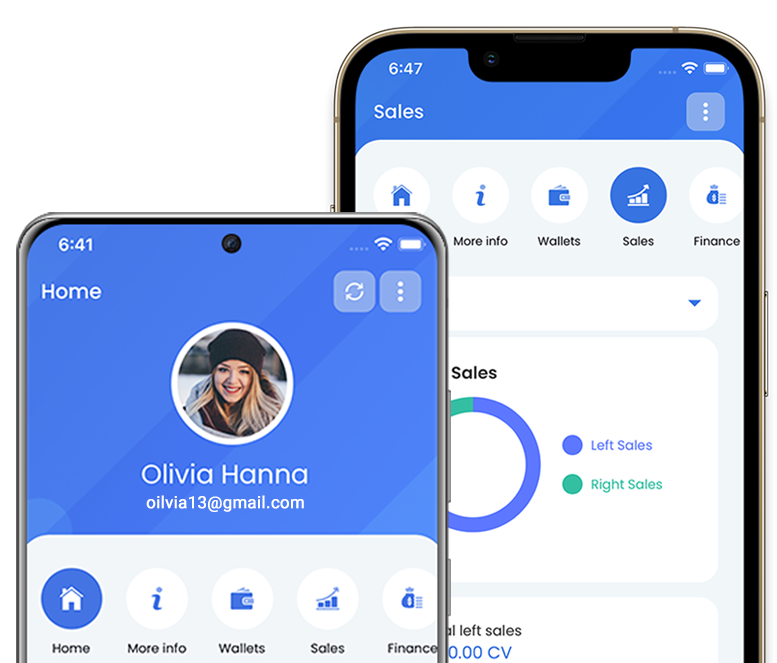
Direct Sales Mobile App!!!
Take your business with you. Anytime. Anywhere.


Epixel Enterprises LLC.
300 Delaware Ave STE 210 286,
Wilmington, DE 19801
United States Of America
Solutions
Products
Resources
Get in touch
Epixel Enterprises LLC.
300 Delaware Ave STE 210 286,
Wilmington, DE 19801
United States Of America
 United States+1 650 491 9744



 Canada+1 437 2208998
 Mexico+52 13322545528
 Hong Kong+852 5616 7921