

















Enrollment of new recruits is essential for a multi-level marketing company to expand its business. A batch of fresh recruits brings in new perspectives, increases sales, and helps expand networks. Providing sponsor bonus is an effective way to achieve this goal. The distributors who bring in a recruit are rewarded with a bonus. This is to reward their dedication and encourage distributors to grow the company network altogether.
In this guide we explore in depth how to implement sponsor bonus, when to reward the distributors, and how to do it without straining the payout system of the company. It is important to strategically build sponsor bonus, as repeated bonuses and high bonus amounts can later cause audit and compliance issues.
What is referral or sponsor bonus in MLM
A referral or sponsor bonus is when a distributor is paid for bringing in a new recruit to the company. The bonus is paid only when the new member completes an action like purchasing a starter kit or placing the first order. Distributors won't be rewarded for mere sign-ups by new members as this would place an unrealistic expectation on the company to reward the sponsors per sign-up.
Unlike in residual commissions, the sponsor bonus is only paid once. Since it's a one-time payment, the company won't have the burden to pay the sponsors forever. This commission system is used by many prominent network marketing companies where sponsors are systematically rewarded without causing cash flow issues. This bonus system is also known as “fast-start” bonuses as they motivate distributors to perform better in their initial three months.
The sponsor bonus has been in popularity since the 70s. But, the emphasis was more on bringing in new members rather than making real product purchases. Eventually, distributors derailed from the goal of making sales to bringing in as many new sign-ups as possible. That’s when the existing sales referral programs were redesigned as sponsor bonus making it a one-time only reward. Today, sponsor bonus makes 10-20% of the total payout while a majority percentage is still generated from sales activities. Sponsor bonus improves the morale of distributors, encourage the freshers, and scaling happens in a healthy manner. An improperly designed sponsor bonus can invite the scrutiny of organizations like the FTC.
How does a sponsor bonus system work
The procedure starts with the sponsor. Sponsors can share the product through their personal connections, events, and digital platforms. The new recruit should enroll and make their first purchase using the sponsor ID, a referral code or by selecting name of their sponsor from a drop-down list curated by the MLM company. This is to activate bonus payment, ensure that it reaches the correct sponsor and avoids false sponsor claims in the future.
The recruit needs to commit a few qualifying actions which include making purchases worth a minimum price already set by the company or paying a distributor fee. It ensures that the recruit is active and serious about their enrollment. Once the payment is verified, the sponsor is paid the bonus immediately within 24 to 48 hours via digital transaction.
Every day, multiple distributors may bring in a recruit. Hence it's essential to integrate this workflow into an MLM platform. The platform will record and document each recruiter's sponsor at the time of enrollment. It detects fake enrollments and avoids fake sponsor claims by distributors. Some companies tend to add advanced layers to their basic bonus system such as bonus activation only when the recruit makes a personal sale and tiered bonuses for premium pack purchases. This promotes genuine sponsorships, improves distributor quality, ensures genuine sales, and prevents misuse of the bonus system.
Working of sponsor bonus system
- Procedure starts with the sponsor
- Unique sponsor ID.
- Completing qualifying actions.
- Automated sponsor bonus.
What makes sponsor bonus different from conventional commission system in MLM
The key characteristic that sets sponsor bonus apart from the conventional MLM commission systems is that the payment is only made once per recruit to avoid endless chain payments. Since sponsor bonus is not recurring, it doesn't put the company at a higher financial risk. 70-80% of the revenue can still be used for product cost, operations, profit margin, and marketing.
Unique referral codes and sponsor IDs are implemented to ensure that one recruit only has one sponsor. This avoids two sponsors claiming for one recruit at the same time. It filters out the joiners who enrolled without any particular intent. Such strict filters promote increased sales activity and growth. In most countries, including the USA, bonus income is considered ordinary income and is taxable. Hence it is necessary for companies to keep a track of all the bonus payments for auditing and compliance management purposes.
Sponsor bonus is considered more effective than the customer bonuses where distributors are paid for customer purchases. Sponsor bonus, on the other hand, rewards distributors for recruiting members who are actually serious about the venture they are enrolling for. Such dedication builds future leaders and creates a team that brings in larger business volumes.
When does a sponsor bonus works best
Sponsor bonus works best in product launch phases and when launching in a new country or city. The 10 to 15% bonus charge won't disrupt the profitability margin as it's a one-time payment that yields dedicated new recruits and business growth in later stages. It works best when it is paired with training sessions where distributors mentor the recruits on how to sell faster and explain the product better. Hence sponsor bonus is certainly a high ROI growth tool as it increases long-term sales and onboards dedicated distributors.
Automation becomes inevitable when enrollments increase daily. That's why it's beneficial to use platforms like Epixel MLM Software where 10,000+ enrollments are handled smoothly in a systematic manner without causing any delay. Through the sponsor bonus system, it values veteran distributors while igniting the fire within fresher distributors to perform to their full potential. Data shows that companies with balanced bonus systems were able to retain 25% of the distributors over the years.
When does a sponsor bonus work best
- Sponsor bonus in launch phase
- Training sessions that amplify impact of sponsor bonus
- Automation for smooth enrollment
- Increasing retention rates through sponsor bonus
Is there a right percentage and how to set one
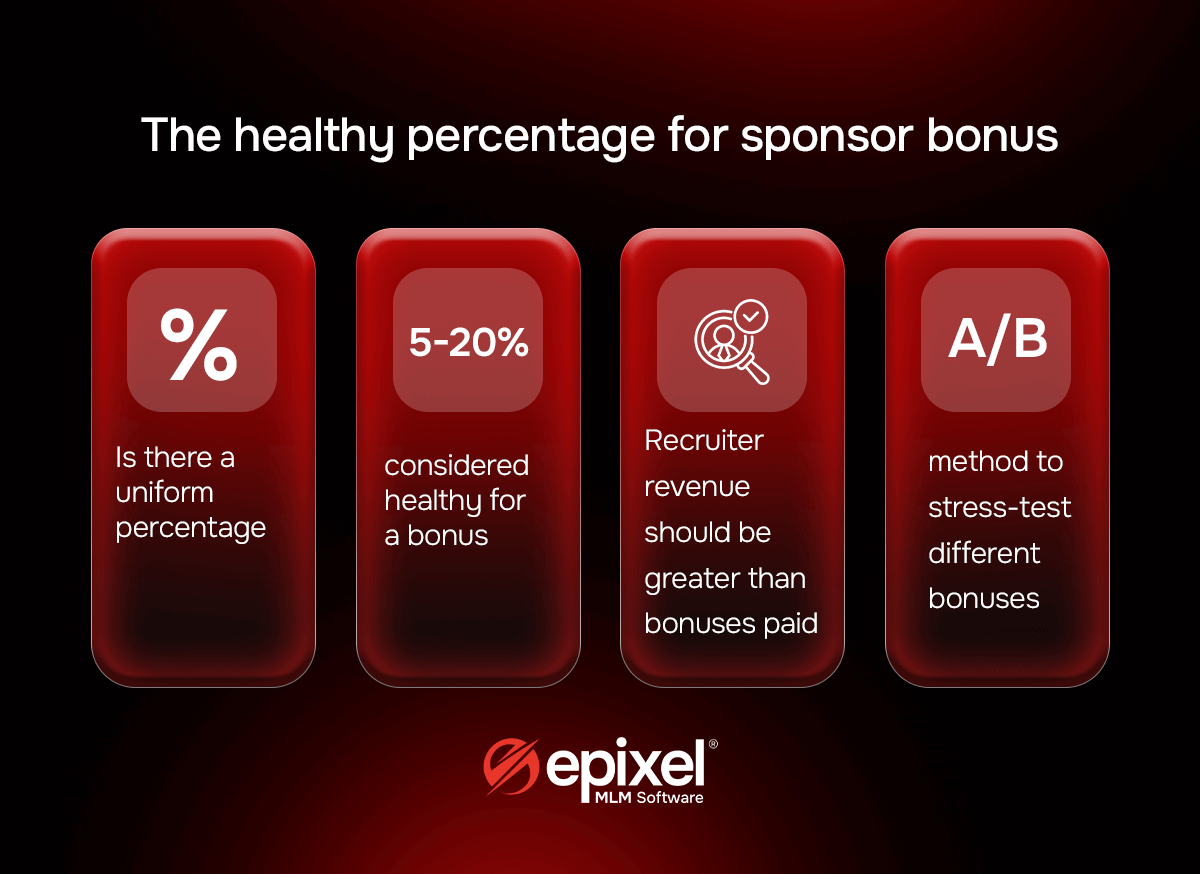
There isn't one healthy percentage that works for every MLM. It depends upon how much money is made from the entire compensation plan. A 5-20% percentage is considered healthy for bonuses. The standard is to calculate the lifetime recruit value. The revenue a recruit generates over time should be 3 to 5 times greater than the bonuses paid. The averages vary from industry to industry. The A/B testing is performed against different bonuses. Years of data are closely analyzed to track retention rates, sales and number of inactive distributors to adjust the bonuses.
Discover how we build resilient businesses with advanced MLM functionalities



How to make your sponsor bonus system legally compliant and safe
Compliance comes first in any MLM business and it is important that the bonus system doesn't turn into red flags like pyramid schemes. FTC guidelines demand that 70% of the income should be from sales and that the bonuses for recruitment should not go above 33%.
In both US and EU, MLM companies need to adhere to policies like disclosing average distributor earnings, sponsor bonus amounts and issue disclaimers that income is not guaranteed. All recruits should be linked to a single sponsor to avoid confusion around sponsor claims.
The sponsors shouldn't be forced to buy large quantities of products to be eligible to sponsor. The distributors should be trained on the recruitment and ethical selling techniques. Limitations should be set on how often sponsor bonus can be triggered, through which unending payout loops can be avoided. Messages that illustrate MLM as a get rich quick business model program should not be encouraged because this will diminish brand quality and credibility in the long run.
Implement bonuses strategically by encouraging quality recruitment instead of mass sign-ups. Sponsor bonus drives ethical growth when bonuses are linked to product sales, income expectations are disclosed honestly, and distributors are well-trained.













Leave your comment
Fill up and remark your valuable comment.