

















 Epixel Research: Fairness and Compliance
The growth of a multi-level marketing company is based on numbers. Ranks, legs, volumes, bonuses, and incentives are all number wagons of the commission engine that keeps the business moving. But for distributors, the most critical number wagon is their payout. For them it feels like a black box because they put in their efforts and get rewarded in commissions, alright! But they do not know the logic, the calculations, or the factors that contributed to their income.
Companies cannot maintain the same compensation structure they promised their distributor at the time of onboarding. When the organization expands, modifications in compensation structure become necessary to sustain the business and profits. But that leaves distributors concerned about the accuracy of new logic and the impact on their paychecks. Hence, every change has to be transparent and communicated rightly to the network. Why because this becomes the foundation of trust, compliance, and distributor engagement later.
Explainable AI (XAI) solutions for commission concerns
The Explainable AI (XAI) framework puts these concerns behind by making every commission change understandable. When a change is made in the compensation structure, XAI explains why a payout changed, and how ranks, overrides, and bonuses are calculated. So MLM commission systems change from opaque to transparent altogether. When changes become explainable and auditable, fairness and compliance follow naturally.
Traditional vs XAI change management methods
Traditional change management methods like PDF documentation and legally heavy change reports will not explain the reason for changes or how they are calculated. Explainable commissions, powered by Explainable AI (XAI), bring transparency to logic and payouts.
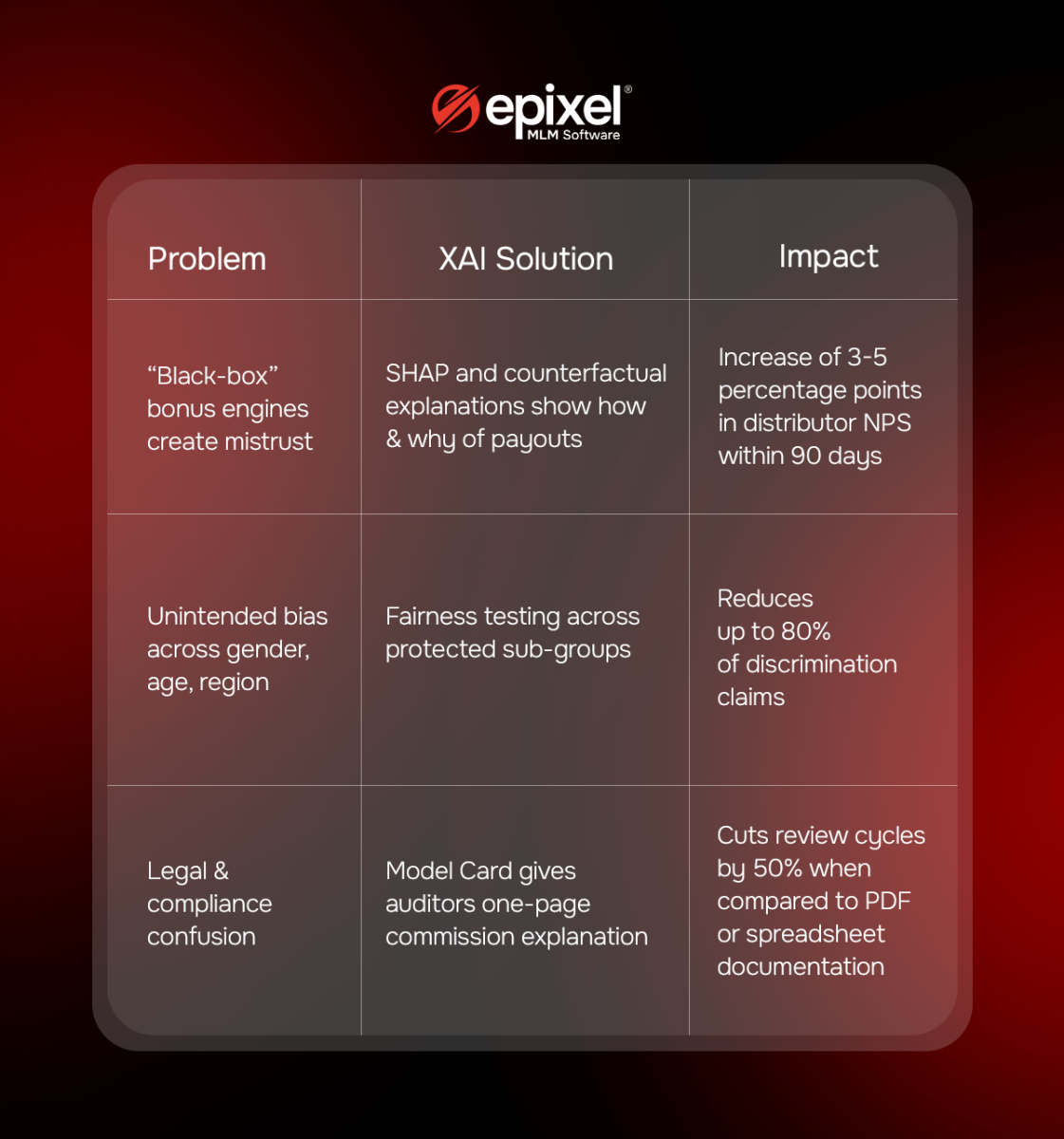
When commission systems are rigid, distributors only see the final payout, not the calculations or logic behind it. This sets the stage for disputes and mistrust. XAI techniques such as SHAP method and counterfactual explanations solve these complexities by explaining exactly which factors contributed to each payout and how making small changes can impact the result. It lists the factors, whether it is personal sales, downline volume, rank rules, timing, or bonuses that helped them achieve the result. This clarity increases distributor confidence and your brand’s Net Promoter Score improves within a short span.
Payout methods, sometimes, are affected by hidden biases in gender, age, or region, if not intentionally. It can be caused by patterns hidden in the data or rules used by the system. Fairness testing your compensation plan can show how present commission structures are performing for protected subgroups or give you warning signals way early. This early identification will help companies fix discrimination related disputes and legal complications.
Commission logic is maintained in PDFs, spreadsheets, and legal clauses. This is difficult to decode for distributors, auditors, and regulators, which is not good for the company’s reputation. Every MLM business must have a XAI-powered Model Card, a single page compensation explanation with detailed commission logic. This reduces review time for auditors and regulators and keeps compliance a simple and straightforward process.
Explainability forms the core of distributor-brand relationships
Resting the responsibility and accountability of commission payouts on the system is no longer an option. It is true that the efficiency of the system affects the payouts but to the ethical side of it, companies must bring in the “explainability” factor into their payout system. The reasons are obvious.
Trust deficiency
Sometimes, it happens that the majority of distributors in the network do not trust the way commissions are calculated, especially when there is a change in the structure midway. Uplines and leaders, themselves, fail to understand the logic and become incapable of explaining it to their prospects and downlines. When distributors, who represent the brand in the market, cannot explain how they earn, recruitment and retention rates drop.
Regulatory complexities
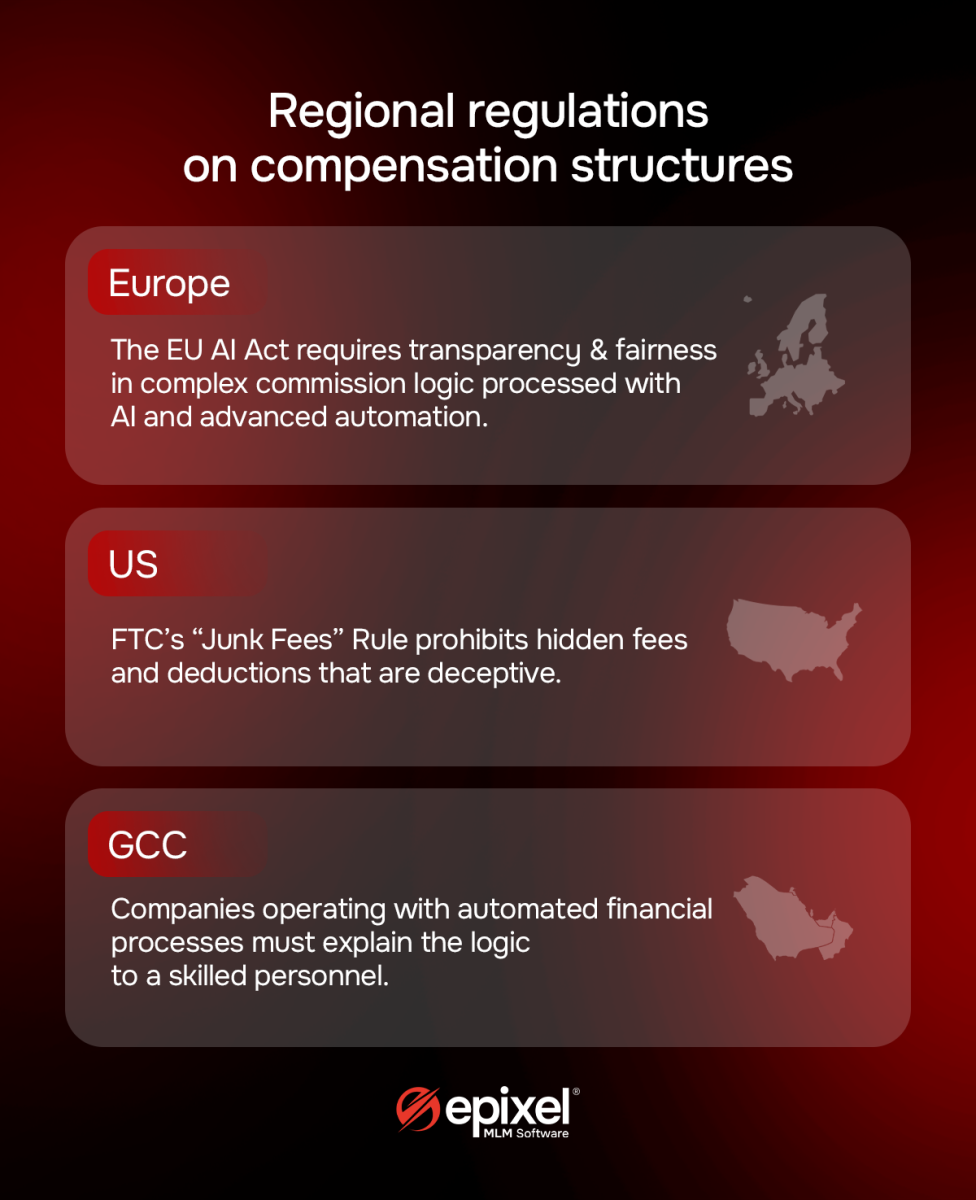
Legal and regulatory bodies have been strict on the importance of maintaining fair and transparent compensation structures. Hidden deductions, adjustments without distributor’s knowledge, or untraceable bonus logic are classified as deceptive or non-compliant practices. These can subject the brand to public regulatory scrutiny, hefty fines, and cause irreparable damage to brand reputation.
Competition
Companies who are open to commission transparency earn distributor loyalty. Changes without communication can affect brand sentiments among distributors. They may not stay when they feel that the practices are fair, or they are not valued. When transparency and explainability become the base of your commission system, loyalty and retention increase, and your network becomes stronger with high quality distributors.
The XAI framework for explainable commissions
Among the many XAI methods, SHAP and Counterfactual Explanations hold importance in the direct selling context. Why because these two practical tools can make ML and rule-based commission systems understandable.
SHAP
It breaks down the contribution of factors like personal volume, team volume, rank, or timing to the total commission payout.
Counterfactual Explanations
Distributors are given practical explanations on what variations bring out the most desired payout. Through Counterfactual Explanations with practical scenarios they get to know what they should do to earn more.
Workflow in an XAI framework

Data related to transactions, qualification criteria, and activity metrics are entered into the commission engine. It does not matter whether the commission engine is AI-driven or rule-based, the same process applies. The XAI layer operates parallelly but in sync with the commission engine to interpret inputs and outputs. It then generates explanations for each distributor using SHAP values and counterfactual guidance.
The system processes the output through the fairness testing layer to ensure whether payouts are biased throughout the protected subgroups. The whole process is documented in the Model Card with a detailed explanation on the working of the system, the risks, and how they are curbed. In the final stage, an explainer UI renders this transparency to each distributor through tooltips, dashboards, or downloadable payout explanations.
Strategic design principles
The strategic principles behind the XAI framework account for the efficiency of the model in delivering accurate commission explanations.
Relevance
The commissions explained by the XAI framework prioritize relevance, so distributors see only the needed factors that matter most to their payout, not a full list of rules and bonuses.
Actionability
Counterfactual Explanations turn every explanation into a guidance plan that can be easily understood and used by a distributor to reach their next nearest goal faster.
Fairness
By default, fairness is integrated into the system in the form of bias checks over every protected subgroup after each commission version release. This ensures fair payout standards and saves your brand from legal and reputational risks.
Governance and versioning
Every change in the commission plan, minor or major, is documented with Model Cards and version tags. Auditors and regulators can review the changes any time during the course of the business.
SHAP method for transparency in payouts
SHAP gives straightforward explanations of margins contributed by each factor in a distributor’s payout. It shows both the positives and negatives of these factors in a payout. There are so many possible scenarios like higher personal volume and rank points can increase the payout but an imbalance between legs or expiry of a fast-start bonus can reduce it. External commission adjustments like currency, tax, or exchange rates can also cause slight variations.
SHAP method represents each of these as clear explanations to distributors so that there are no suspicions or disputes on the commission process.
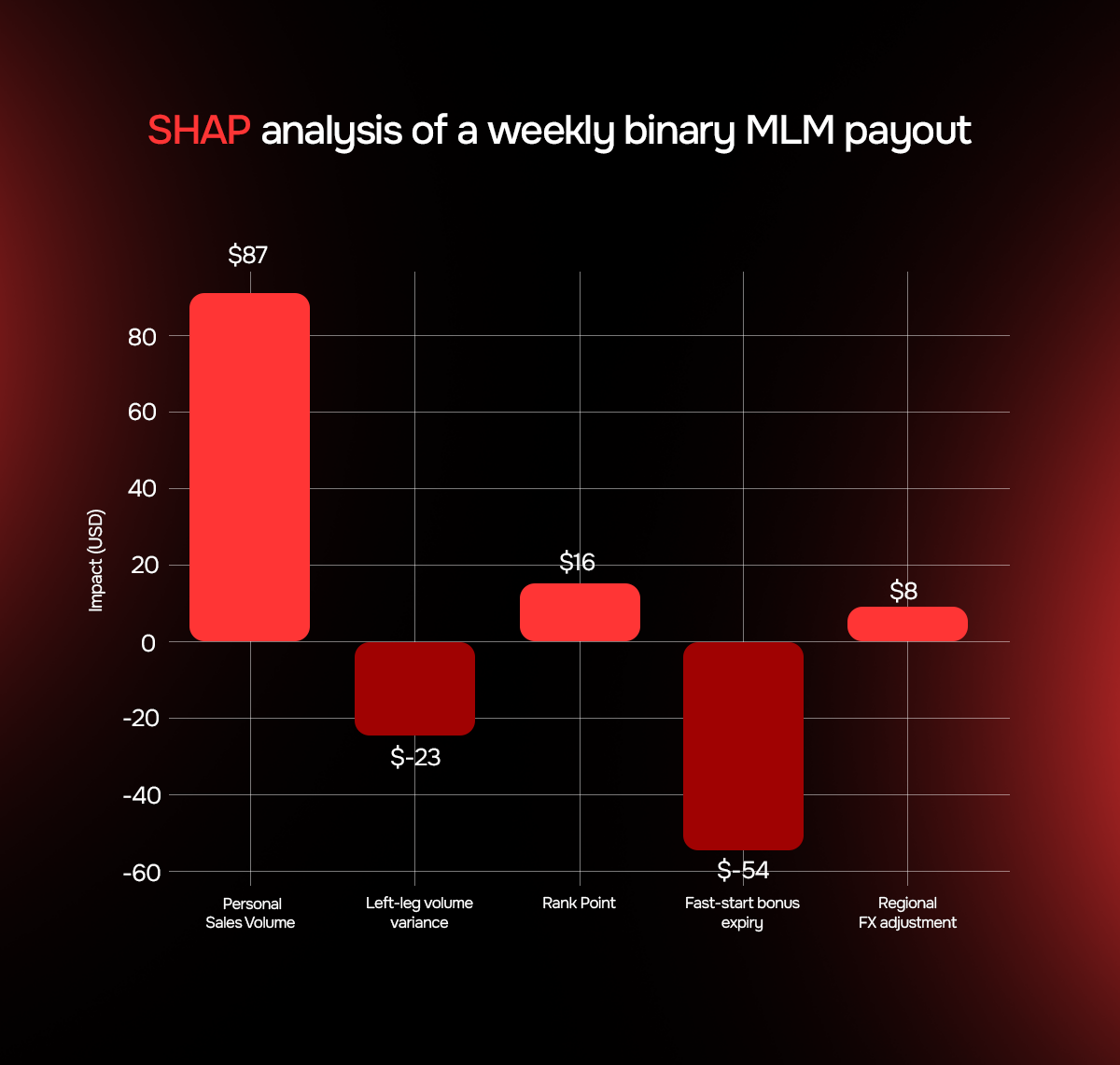
The effectiveness of SHAP increases when the numbers are explained in plain language without jargon like “The fast-start bonus calculation window closed on 31st October”. These easily understandable reasons give distributors clarity and instill trust across commission processes.
Identify favorable payout logic with counterfactual explanations
Counterfactual Explanations guides distributors through an “if...then” stride where they can clearly see their current performance against the progress to a nearby goal. They can plan the steps to be taken and see the impact of each step on the end result. Counterfactual Explanation lays out practical steps to be taken to achieve the nearest possible goal.
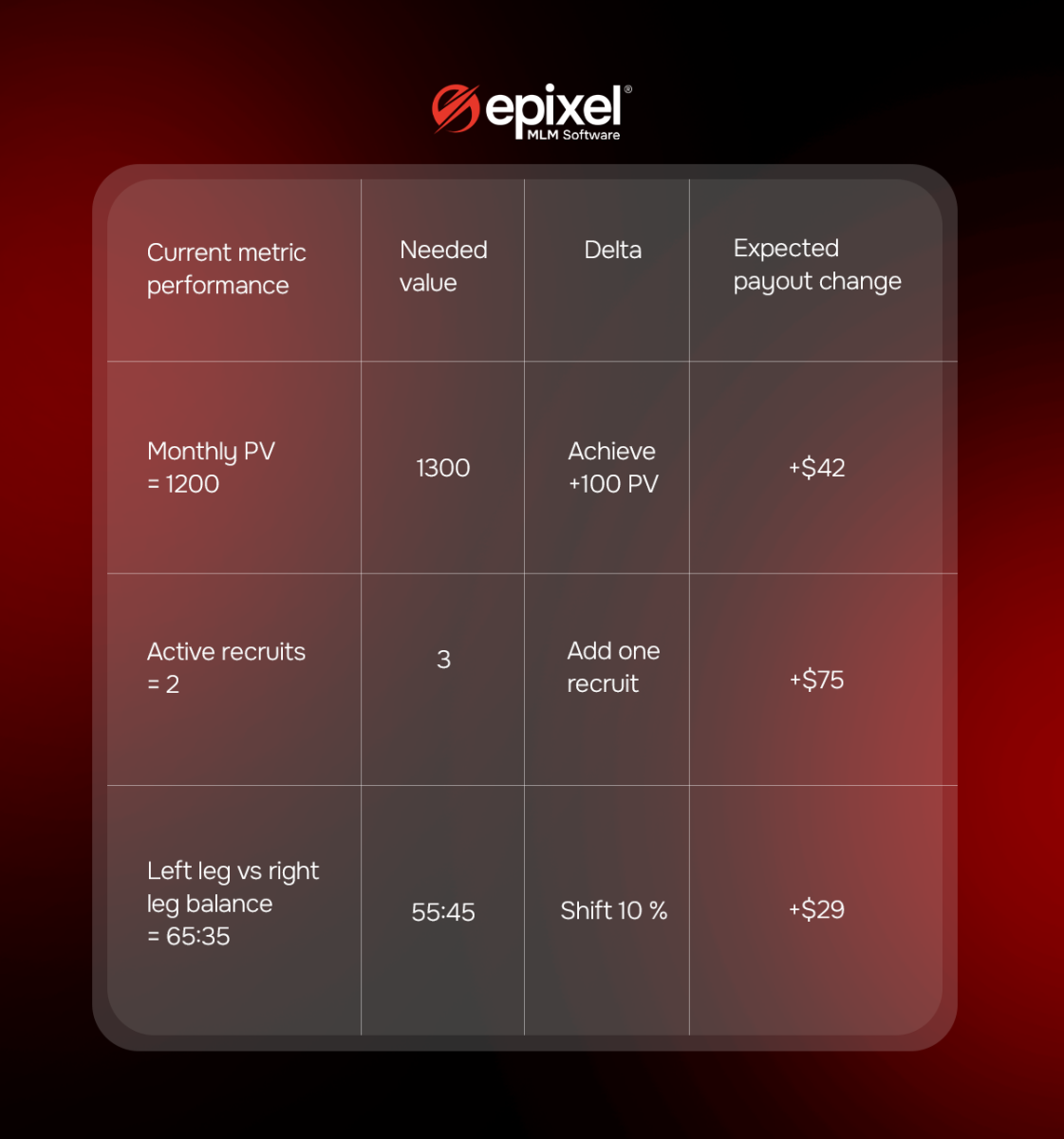
MLM companies can achieve their projected results without overwhelming distributors with complex plan documents. Counterfactuals break compensation rules into simple, understandable micro-goals. Distributors can choose from a range of activities that suit their convenience, like selling a bit more, sponsoring, or strengthening a weaker leg. This improves distributor confidence and for the brand, this translates into growth, network balance, and retention.
Discover how we build resilient businesses with advanced MLM functionalities



Testing fairness and bias across protected subgroups
If the results or the process is not fair, then there is no point in explanations. Even when a commission system is simple and explainable, it can be a disadvantage only to certain distributor segments. And this exactly is the reason why fairness testing after each release cycle becomes important.
Commissions should be fair irrespective of age, gender, or region. In order to ensure this, implement these tests after each change cycle:
Demographic parity
If two distributor segments, whether from different age, region, or gender have similar performance, their average commission should not differ by more than 5%.
Equal opportunity
All distributors must have equal chance of achieving a rank or qualifying for a commission. This should be based purely on performance and not any other demographic factors.
Counterfactual fairness
Synthetic twins with same performance rate but different sensitive attributes, the payout difference should be less than 2%.
You can automate these fairness and bias tests using Jupyter notebooks. The system can run checks on all distributor data and highlight violations for review.
Model Card template for direct selling companies
Once proposed by Google Researchers, Model Card is a short standardized document that explains how an algorithm works, what data it uses, and the risks it carries. MLM businesses can now make these Model Cards a best practice in the context of commissions.
A Commission Logic Model Card clearly explains the scope and purpose of the compensation plan, and whether it is rule-based, AI-driven, or hybrid. It lists all inputs that constitute payouts, the data used, and how payouts are calculated. The fairness levels of a compensation plan and its impact across protected subgroups are presented clearly with each commission version.
The limitations of a commission system like delayed returns or payout lags are disclosed in the model card plus versioning details, ownership, and escalation contacts. Model Cards should be published in easily accessible locations so that distributors and regulators can access them whenever needed.
Download the free Model Card template to maintain a transparent and audit-ready commission structure.
Communicating plan changes with the network
Changing compensation structure has the same amount of technical and communicational challenges. Even a well-planned structure change can cause confusion if not communicated properly. When distributors are not detailed about the relevance and effect of the change, it can cause a trust issue. So, all audiences must get the transparency they need without overload.
A three-tier communication strategy can tailor the explanation approach for each tier with only relevant information.
- The board and C-suite leaders will not need the mechanics of the change. KPIs laid out neatly on a fairness dashboard will show that the plan is compliant and balanced.
- Top leaders need to be informed in detail on the earning possibilities and growth drivers in the new structure so that they can explain and guide their downline teams.
- Distributors must receive clear personalized explanations on their back office portal or via email explaining the changes, their effect on earnings, and how they should plan to move forward.
Timing the change is also important. Model Card and FAQs can be published or shared personally before a minimum of 45 days for the leadership teams to review each change and make necessary adjustments if needed. Distributors can be introduced to the plan 30 days prior to its launch to test it with their past data and see the results themselves. You can auto-alert distributors who are close to their next goal with auto-alert counterfactuals. Once the change comes into effect, fairness testing and SHAP explanations should run continuously and in real time to detect anomalies, biases, or unexplained changes.
Such an end-to-end communication approach will help in the smoother adoption of plan changes any time during the business journey.
Implementation plan for XAI framework
What we are worried about before implementing any change is the disruption to ongoing operations because when that is interrupted, losses pile up and revenues drain. Hence, the implementation has to be well-planned and executed. The implementation of the XAI framework can be accomplished without disruptions in 90 days.
Weeks 1-2
Create an XAI implementation team with members from compensation, operations, data science, legal, and distributor teams. The team will put together the purpose of the change, success metrics that must be measured, and decision rights. This ensures that compliance, communication, and technical feasibility are in place before the rollout happens.
Weeks 3-5
Analyze and understand the positives and negatives of the current commission plan and compare it with the XAI framework. The result will show you where explainability, fairness checks, or documentation is needed.
Weeks 6-7
Integrate XAI capabilities and connect SHAP and counterfactual libraries to the commission system. The system can then be tested against past commission data to ensure accuracy. If the explanations given by the XAI tools match real payouts, that means the commission plan is fair and audit-ready.
Week 8
Model Card is created around this week to document the changes and current commission plan with logic, data used, limitations, and fairness test results. Automated fairness tests should run to identify if any set limits or conditions are not met.
Weeks 9-10
It is now time to give users the real experience. SHAP bar charts and counterfactuals are built into the distributor portal as an MVP for internal testing.
Week 11
The approach is tested with real users, a team of select distributors who review the explanations and communication materials and provide quality feedback on its usefulness and trust.
Weeks 12-13
The final weeks will focus on quality assurance and readiness. Once final testing and legal approval are completed, the system can be confidently launched.
Getting across risks with practical mitigation strategies
If distributors are given too much detail or complex commission documents, they might ignore the information entirely. That brings the need for simplified and personalized explanations for each distributor tier.
The same explanations do not hold for a long time. When the business conditions change over time, these explanations become outdated or misleading. Continuous tests accompanied by explanation reviews will ensure that distributors see relevant and commission-specific explanations.
Even when explainability is in place, regulators might be doubtful about the trustworthiness of explanations. In such circumstances, Model Cards play an important role in backing these explanations.
There is also the risk of distributors misusing the framework. There are chances that distributors will resort to fake orders or other malpractices to increase their earnings. In order to avoid this the commission plan should have preset criteria such as minimum customer numbers or eligibility rules.
Advantages of XAI framework
Compliance and trust are the foremost benefits. But beyond that, an XAI framework through explainable commissions can bring in stronger leaders and confident investors. The opacity of commission plans is always a drawback and the most crucial factor that top leaders consider when choosing a company.
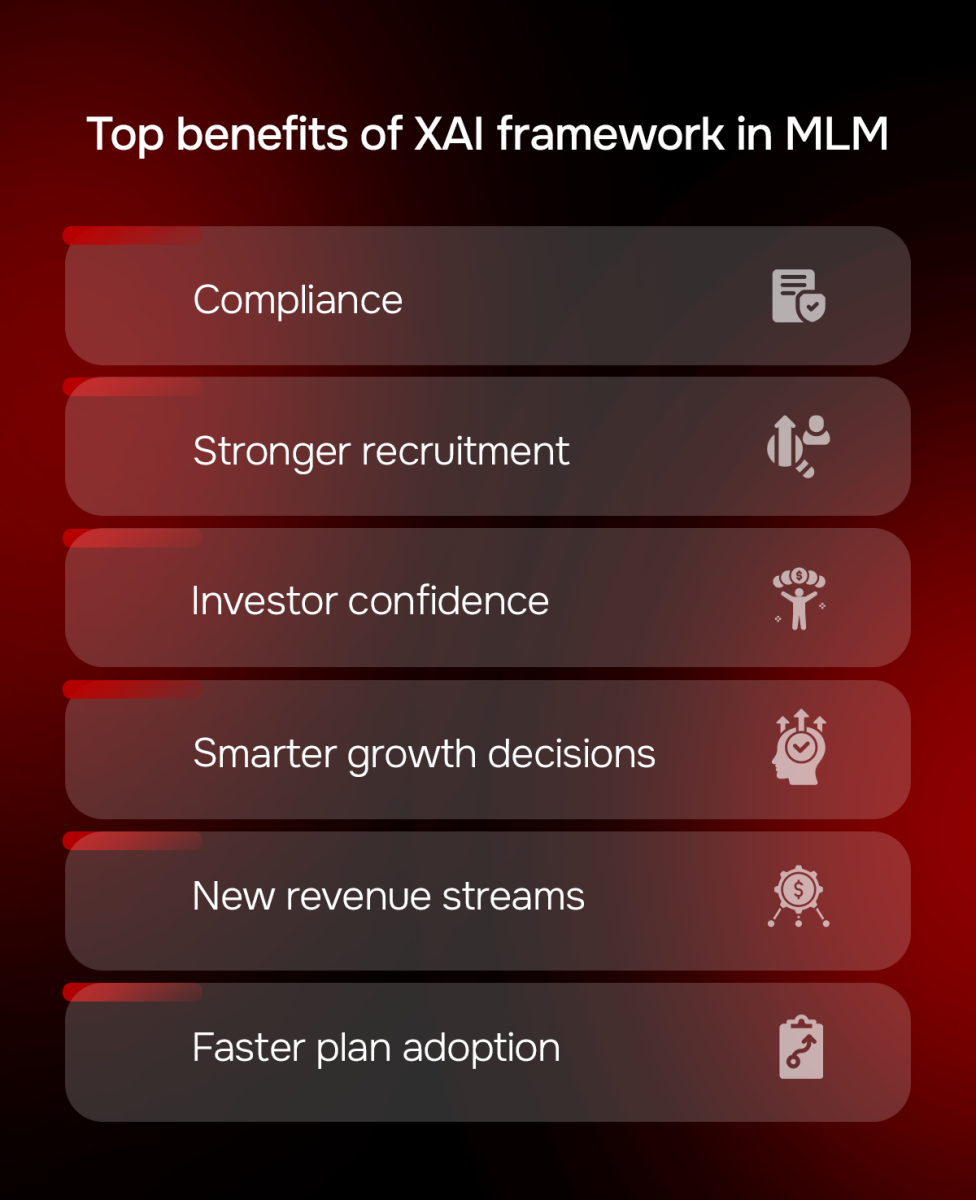
Investors confidently invest in businesses with a transparent plan because there is less room for disputes and risks. Companies can bring revenue with XAI explainer by licensing it to partner brands or clients. It also gives companies the opportunity to make bolder commercial decisions.
Conclusion
Transparency in operations becomes the cornerstone of trust and sustainable growth. Compliance is important, but the first battle is convincing your network that the system works fairly and in their favor. By implementing an XAI framework into your commission system, you are not just establishing transparency but laying a foundation for your business on trust, loyalty, and engagement.














Leave your comment
Fill up and remark your valuable comment.