













English
- English
- Español

- 简体中文

- Français

- Deutsch

- Italiano

- 日本語

- 한국어

- Portuguese, International



30 October 2025
 The Expert Edge
Interviewer: Minu Chandran, Senior Industry Research Analyst
Interviewee: Becky Launder, CEO & Co-founder, Modern Direct Seller
Hey hey! Becky Launder here, CEO and co-founder of Modern Direct Seller. I am so excited to be here with you today to answer some questions that were submitted in advance — all around modern sales strategies that spark growth across companies and what direct sellers are really looking for to stay relevant in this ever-changing industry.
A little bit about myself — I support direct sellers as well as direct sales companies with training, systems, and strategy. I’ve had the privilege of working with hundreds of different companies across the industry to support their growth, elevate their businesses, and take them to the next level.
One of the things that’s really interesting today is the number of pivots we've seen over the last couple of years in what direct selling looks like. In many ways, that’s still being defined. With social selling and digital marketing on the rise, and more companies leaning into affiliate models, it’s a really exciting and transformative time in the space.
The students I work with who are seeing the most success are those embracing modern sales strategies — weaving them into their businesses, particularly in their daily selling habits.
The companies I work with are also forward-thinking. They know their sales field needs the most relevant training to stay current. Direct selling today is evolving quickly, and those keeping up are growing in ways we’ve never seen before.
So let’s jump into the first question:
I’m actually going to spin that a little — let’s talk first about what hasn’t changed.
We all know that direct sales is built on relationship marketing. The best way to sell is still by connecting one-on-one — seller to customer. That hasn’t changed.
Relationships are still at the heart of this business, and that’s what sets it apart from other models. Shoppers could go to big box stores or shop online, but they choose to buy from a direct seller because they value their opinion, the customer care, and the personal connection.
Now, what has changed — is the how.
There’s been a big shift from in-person events like vendor booths or in-home parties to social selling and digital marketing. This shift requires a different skill set for the modern direct seller.
Today’s direct sellers are connecting with customers on social media, building relationships through platforms rather than in living rooms. It’s more of an art than a science — knowing how to have genuine conversations online and moving followers into customers.
Online parties have also evolved. A few years ago, Facebook parties were the go-to. But now in 2024, they look completely different.
We’re seeing strategies like the “party in a post” format working really well. Instead of a popup Facebook group with hundreds of posts (and only one or two comments), we’re condensing everything into a single post. The host invites guests to that post, and they engage in one place — simple, streamlined, and effective.
We’re also seeing success using blogs, websites, or other platforms outside social media for a scroll-and-shop format. Guests visit a webpage, scroll through a landing page, get the info they need, then click to shop — usually via a replicated seller website.
But — both of those strategies work best when paired with one-on-one conversations happening on the sidelines. That’s a crucial piece.
And those conversations? They’ve shifted from phone calls to text messaging, text automation, and SMS marketing.
The most sophisticated sellers I know are using tools that allow them to easily connect via text and maintain those relationships.
So overall, we’ve moved from the living room model to one that embraces social selling, digital tools, and automated systems that scale a business much faster.
Would you like this formatted into a blog-ready post with a headline, subheadings, and quote highlights? I can also turn this into a blog series if you have the next part ready.
Alright, so the most impact — I mentioned here earlier — but we're seeing a lot of success with those that are really leveraging one-to-one conversations. And that could be on social media. But the idea would be creating really compelling content and moving that content into a one-to-one conversation.
And that's a leap that people have a hard time making. They're sharing things online, and then when someone's liking or commenting or engaging with them, it's pretty easy to engage back on that post — but it's a little bit harder to take that into a one-to-one conversation, to foster that relationship, share more information about the business opportunity, and invite them to shop or join or host — or whatever that next step might be for them.
So that's really where we're seeing a lot of success in the social selling space — is those people that can effectively create compelling content that creates curiosity and interest, and then move that into a one-to-one conversation.
Now, productivity is my thing. I think sometimes we feel like we've to spend hours and hours and hours and hours a day on our business, when really if we stay focused and we know what we need to do and prioritize those most important business building activities, it's really easy to get in and get out of your business. And I would argue 20 minutes or less each day.
So a formula that I share with my students I like to call the ABCs, and those stand for:
A - Active selling or asking for a sale
B - Building relationships
C - Creating content
If you're doing those three things in your business every day, your business is going to grow. So let me walk you through what that looks like in a little bit more detail.
So the A — that active selling or asking for a sale — the idea there is every day you're in the habit of practicing daily selling. You're asking for a sale whether you're doing a big event or if you're having a one-to-one conversation in real life or on social. You're checking the box that you ask for a sale on a given day.
That B is really for building relationships. I have a formula I share there called the 3 plus 3 plus 3 equals 3,000. So what that stands for is talking to three current customers, three future customers or lurkers — people that have been hanging out but not yet shopped with you — and three people you'd love to have on your team or collaborate with. And when you do that every single day over the course of a year, that adds up to over 3,000 conversations.
So when we get in that habit of just having those nine conversations, doing our 333s every day and building the relationships, good things happen from there.
The next area is C, and that's really creating content. This is where we're building out our sales pipeline. That content that we're sharing is drawing people into our business, then we build a relationship with them, and then we ask for a sale.
So it is the ABCs, but another way to think about it would be those CBAs:
Create the content
Build the relationship
Ask for the sale
So if you're doing that on the regular, you have a healthy pipeline of leads that you're able to talk to and invite into your business as well as repeat shoppers that are coming back with you that you're staying in front of on a regular basis.
So in terms of productivity, that's definitely a tool I highly recommend.
Of course, some type of way to keep track of your customers — whether you're using your back office system for that or if you have a different outside third-party CRM or even a good old Google Sheet or a Google Calendar to track who you've talked to and when — is a great tool to have.
I'm also a big fan over here leveraging digital marketing — so using email marketing or using text marketing as another way to stay in front of our customers. We're using all of those systems.
So, there's a lot of things companies can do to really set up their field for success. I think the top most important is really transparency and trust. It's so important that your sales field has faith in what you're doing, trusts the process, and sees all the good work you're doing. So that transparency — on the good days and the not so good days — is really important to build a loyal field that just keeps coming back for more.
I think the other thing here that we're seeing a lot of, a lot of changes around, is some of the policies. Most modern direct sellers are looking at multiple income streams. So I'm a big believer that long gone are the days of saying that once you're with our company, you can't work with other companies at all. Those direct sellers that are going to be committed to you are going to keep coming back to you. You don't need a policy to enforce that.
Because we're seeing time and time again people looking for other income sources — especially in years where income might feel down — they're really looking at other opportunities that they can leverage their personal brand that they've built to create a bigger income. So from a policy perspective, that's really important.
Of course, recognition and incentives is huge as well when you're hitting sales milestones. And it's not just for the top 1% of your company, but really thinking about what those incentives look like for those that are consistent or kind of more in the middle of the row — that middle tier of performers in your organization. It doesn't always have to be just for the top. Give a reason for that mid-level to be excited.
A lot of research out there shows that most direct sellers are just looking to make a couple hundred dollars a month. So set those rewards in place for those people that could just strive to hit maybe $250 in commission each month or $500 in commission each month and have some cool incentives available for them too, so they have something to reach for and build for as well.
And then I think the other thing that companies can really do is invest in the field with training and systems and strategy and coaching, and working with them to stay relevant and plugged in.
I see direct sellers across so many companies that are joining outside programs to get the training and skills that they need to be successful because it's not provided at the company level.
So when you're thinking about investing in your field, don't just think about the incentives or the comp plan but really think about the tools, the systems that they need to be successful. Because the more we can equip them with that training, the more successful that they're going to be — and their team is going to be as well.
Together, we have a more productive business and we can get more done.
Some of the common challenges that I'm seeing that direct sellers are facing on a regular basis with modern-day strategies is really empowering them to actually put them in place, right?
There's something still that, you know, we have that stigma that it feels scary or intimidating, but most direct sellers are lacking confidence and experience to actually go out there and implement what they're doing.
One of the things that we do inside our MOD and Direct Seller Academy is that we have accountability built into our program. So there's a way that they can log in each day and say they got the most important things done in their business, click a button, and confetti falls from the computer screen, right? It's the little things like that that really are important for them.
So when we're thinking about accountability, that's something that a company can build in to really support direct sellers and have more consistency in their business because I think a lot of them are really struggling with that confidence of what to do and when to do it, and then doing it on a regular basis.
I think another common challenge that I'm seeing across the field is that we do a really great job serving our repeat customers and those customers that shop with us on the regular, but it's a bit harder to bring in new customers.
And we know that when we bring in new customers, that leads to new hosts, and that leads to new teammates. It leads to, you know, good things happening in your business. But it all starts with bringing in fresh energy and new customers.
So really focusing training and strategies and incentives around bringing new [customers] into your business is going to prove to be really, really profitable as well.
So when we're thinking about those challenges the direct sellers are facing, I would say accountability is definitely up there on the list, as is finding new customers that want to try out their product.
And if you have a catalog, or if you have a sample system, really thinking about what those baby steps are from the time they connect with somebody — especially in the online space — and when they actually ask for the sale.
Because there's probably a few things that happen in between. Maybe it's sending a catalog, maybe it's sending a video, maybe it's sending a sample, maybe it's just building the relationship and asking some great curiosity-type questions that are going to pull people into their business.
So really helping the field see: "Okay, I'm going to post this, then I'm going to share this, this, this, this, and I'm going to invite them to do these things, and then they're going to be a customer."
So having them really see that long-term vision and knowing that customers just don't come flying out of thin air. It's going to take time and it's going to take focus to continue to build that relationship in a really good way before they say yes and jump.
So when it comes to technology that modern direct sellers should be leveraging in their business, there’s a few systems that I absolutely love.
I love, of course, our own product — it’s called Oh My High. It’s a way for a direct seller to create an easy plug-and-play website and blog, and have lead forms and scroll parties and kind of their own little corner of the web where they can really build their personal brand independent from social media.
So that’s a tool that I feel like is a must-have as direct sellers are moving into the digital marketing space — is having a website where they can share more about their business, more about their product, share videos, share blog posts, and share more information about their own personal brand so people can get to know them on a deeper level.
So that’s a tool I’m a big fan of.
Hand in hand with that would be email marketing. So once people are landing on that website, having a way to draw them into the website where they can connect with them and stay in front of them on a regular basis.
I know a lot of people would argue that email is dead. It’s not dead. There’s definitely a profitable way to build your business leveraging email marketing.
The one thing I love about email is it’s up to the end user if they want to click and open that email and read it or not, versus social media where it’s up to the algorithm on who gets to see what on any given day. Only a small fraction of your followers are actually seeing what you’re posting on social.
And that’s where a blog or a website can really be a great tool going along with your email marketing to keep that in front of people.
The other tool that has really risen in popularity this year has been text marketing. And I think the stat is 99% of texts get opened. So having short conversational messages being sent out is absolutely important in the direct sales space when we’re leveraging text marketing.
I’m training my students to make sure that they’re leveraging permission-based marketing and asking if they’d like more information about an event coming up, or about an info session, or a workshop, or a product, or a sale before assuming that’s what they want to hear.
So using that text marketing as a way to get in front of people and ask good questions to build the relationship is absolutely critical.
Once we’re asking those questions, they respond back and you can engage in a dialogue with somebody to get to know them on a deeper level.
So text is another tool that I’m a big fan of.
And of course, social media — we’re not leaving social media out here. We know that there is a huge upside to social media, especially in growing your business and connecting with new people that you would have never met anywhere across the globe.
So leveraging technology is absolutely important.
Social media is one piece of the puzzle.
And as we’re thinking about social media, I’m a big fan of tools like SyncShare where you can actually schedule that social media ahead of time, so you’re not waking up every day thinking “What should I post today?” but really being intentional about your content strategy and how you’re showing up for your audience on social to draw them in, again build those relationships, and ask for the sale.
All right, when we're thinking next about strategies that direct sellers need to build a loyal customer base — this is a great question, love this one so much — but we definitely need systems in place to support our current customers.
Once we've acquired a new customer — and that costs a lot of money to acquire somebody — we've spent time, we've invested time and energy into that person. The best thing we can do is to stay in front of them and have them become a repeat customer.
So when we're thinking about those systems, I definitely would encourage direct sellers to have some sort of CRM system to remind them of the key touch points of when to follow up.
Now I recommend a couple of key moments to reach out to your customer.
Of course, once they place that initial order, we want to make sure that we send a thank you note. We say, “Thanks so much for purchasing, I'm so excited for you.”
We also want to let them know when their order has shipped and send them that tracking number. I know this is automated by a lot of systems out there, but it doesn't hurt for the direct seller to reach out directly and say, “Hey, it looks like your order is going to arrive on Tuesday. Let me know you got everything okay.” Again, just another way to engage in conversation during the sales process and ensure that you have that repeat customer.
Then, once that order arrives, that's another key touch point: “Hey, did you get your order? What did you think? Did you have any questions? Here's some additional tips about that product that you purchased.” Absolutely important.
Those touch points usually happen. Most direct sellers are pretty good at that.
Point in the process where things fall off is asking for a repeat purchase. It's a month down the road, or six weeks, or eight weeks down the road saying, “Hey, checking back in — did you use all of that? Do you need more? I know you bought this, I also think you'd like that — this is a complimentary product.”
Continuing that conversation over time is absolutely critical to ensure that you have those loyal customers coming back to you.
Now beyond that, you're going to leverage all your platforms. You're going to stay in front of them on social media, using text marketing, using email marketing, and really supporting their journey so you're the first person they're thinking of when they're ready to make that purchase.
So big fan of leveraging those systems to ensure that we have some good customer loyalty.
I know a lot of my students are leveraging customer appreciation events where they're loving up on their customers — maybe they're throwing in some bonuses or some specials for those repeat customers to keep them excited.
Especially when new products are released, that's another really great excuse to reach out to your customers and make sure they're coming back and buying more.
Now the last question is really around what those emerging trends are that are going to really shape the future of direct selling.
And I—I love this question so much because it’s going to be a really interesting ride in front of us.
You know, we’re seeing a lot of companies shifting and thinking more about affiliate models and influencer models, but I still think we’re going to have a really strong direct sales channel.
I—I see a lot of direct sellers building out lifestyle brands where they’re representing their favorite skincare company and their favorite bag company and their favorite vitamin company, right? So they’re representing multiple brands and they have this loyal following that like to shop with them because who they are and their personality and that brand that they’ve built, and they have a really strong loyal following.
Influencers do this all the time—they’re representing many brands. We also see affiliates doing this as well.
So I think we’re going to see some shifts that are really going to influence the direct sales model and some things we can really learn from influencers and affiliates and how they run their business.
The one thing that I think is a really big differentiator in those models versus direct selling is the customer service component.
When I buy from an affiliate or an influencer, I don’t expect them to check up on me to see how I like my order, and that’s something we do in direct sales, and we do it really, really well.
So that’s an exciting thing to kind of think about—how can we create these communities that are thriving and exciting?
You know, an influencer doesn’t have a company conference to go to or an incentive trip to join necessarily.
So, I think we’re going to see a mesh of affiliate marketing and influencer marketing and direct selling.
And I think as long as we’re staying true to, you know, building relationships and really supporting people in the work that we’re doing, we’re going to see really, really strong momentum as we’re kind of writing this next wave of direct sales.
So I just want to thank you so much for letting me pop in here and share a little bit of my perspective on what direct selling and modern direct selling really looks like.
I would absolutely love to hear from you if you found this video valuable.
Shoot me a message—I am on Instagram at modern direct seller.
You can also find me over on Facebook: moderndirectseller.com FB and all things modern direct selling over on our website moderndirectseller.com.
Thank you so much for being here today and I hope you have a great day.
Take care.
Epixel MLM Software anchored 450+ network marketing companies to success through their business process automation in more than 88 countries. Let Epixel MLM Platform revolutionize your MLM business with 100+ proven features intelligently tuned for small, medium, and large enterprises.
Try our Ultra-modern
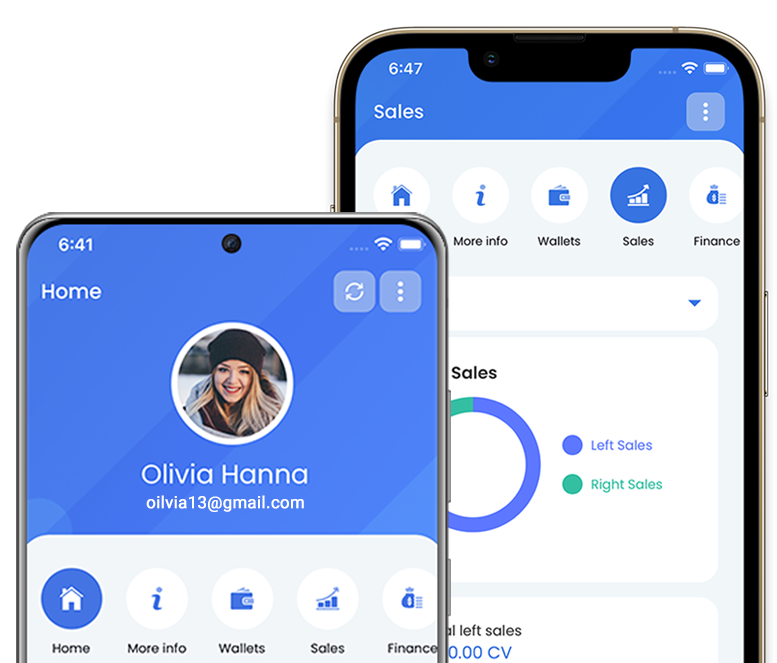
Direct Sales Mobile App!!!
Take your business with you. Anytime. Anywhere.


Epixel Enterprises LLC.
300 Delaware Ave STE 210 286,
Wilmington, DE 19801
United States Of America
Solutions
Products
Resources
Get in touch
Epixel Enterprises LLC.
300 Delaware Ave STE 210 286,
Wilmington, DE 19801
United States Of America
 United States+1 650 491 9744



 Canada+1 437 2208998
 Mexico+52 13322545528
 Hong Kong+852 5616 7921