
















Download Free Pay-Cycle Health Scorecard for MLM C-level executives
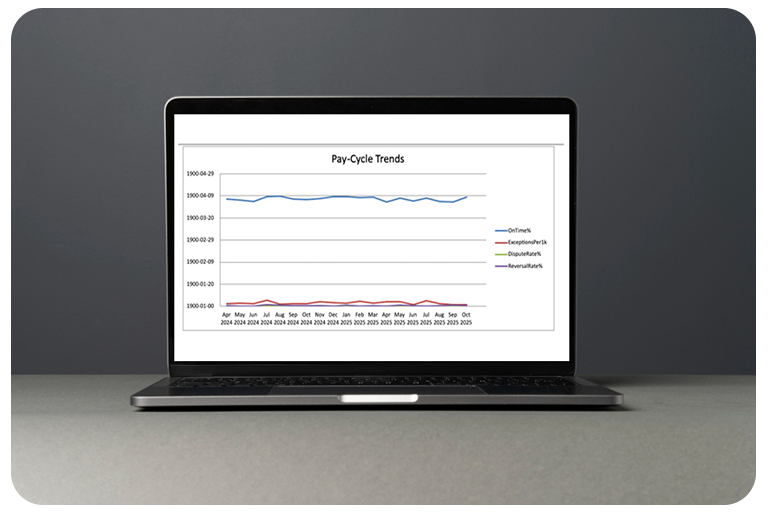
Are you a C-suite executive team member contemplating whether the brand pay-cycle plan is the right fit for the business or not? This free Pay-Cycle Health Scorecard enables CFOs, COOs, Compensation and Finance Ops to assess pay-cycle performance at a glance. It would help you to make decisive choices on the type of cycle, cut-off policy decision, holdbacks or clawbacks, and cash-flow risk before the minor issues develop into controversy.
Pay-Cycle Health Scorecard is operational, and the sample information in it is realistic and is editable in Excel or Google Sheets. The scorecard assists you with follow-up of on time percent, exceptions, conflict, reversals, cost of money, and field sentiment using clean traffic-light dashboard.
Choose the perfect pay-cycle for your business, monitor holdbacks, and liquidity of the company using our free Pay-Cycle Health Scorecard Template.
*No email required.
Explore the free Pay-Cycle Health Scorecard
| Tab | Purpose |
|---|---|
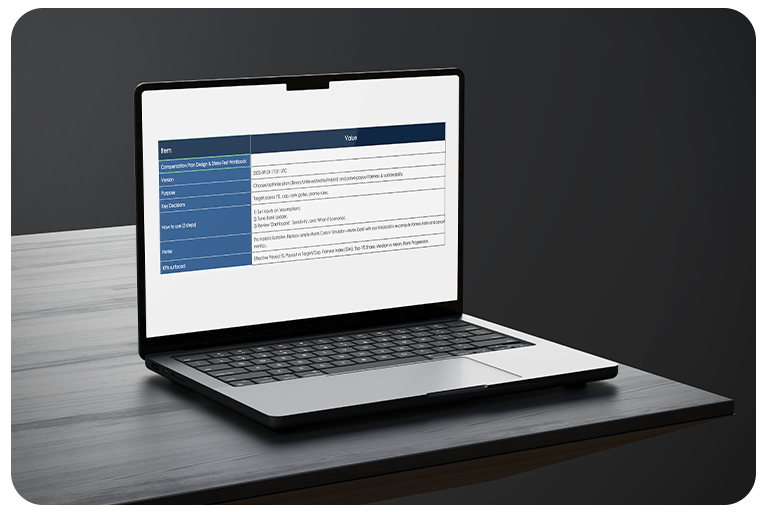
| README | This provides a quick orientation, takes you through the KPI glossary. A short "how to use” is given in three simple steps to provide a brief idea. |
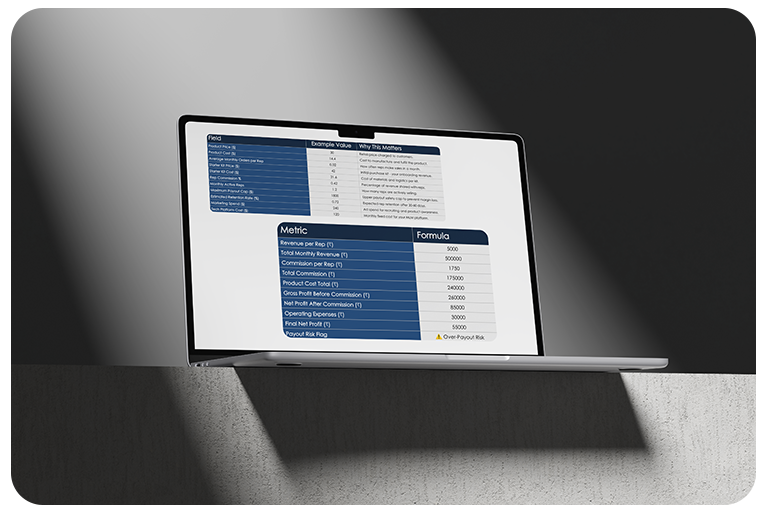
| Assumptions | The fundamental guidelines are determined by you, including the frequency of payment (weekly, monthly, etc.), the day of payment, the holdback %, clawback %, and the resultant interest or expense. |
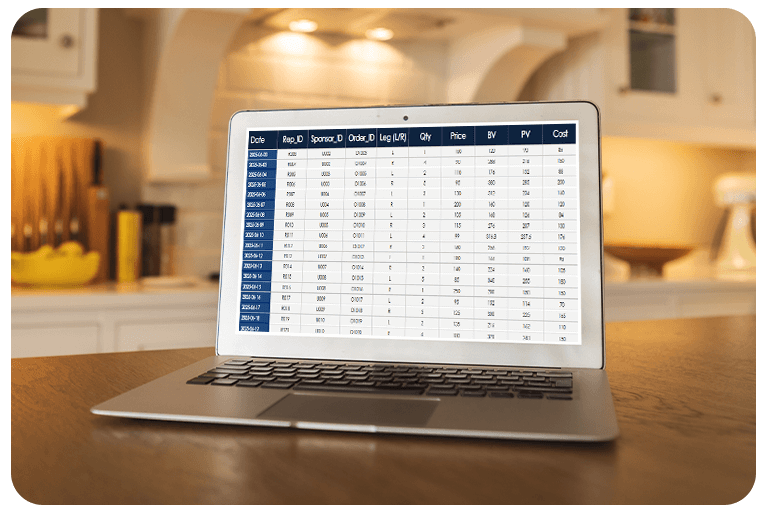
| Data Inputs (20 periods) | You enter your previous 12-20 payment records here—number of payments made on time, those with problems, and the time of payment. |
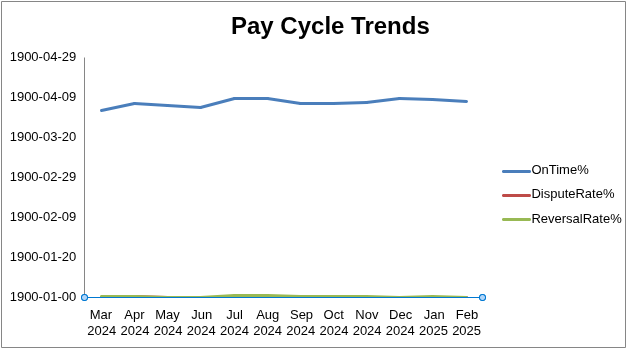
| Dashboard | The report card perspective displays green, yellow, red lights that indicate good, okay, and bad performances on major aspects such as on time payments, disputes, reversals, and produces trend charts. |
| Trends | The scorecard shows KPIs at each period which makes it presentation and audit ready. |
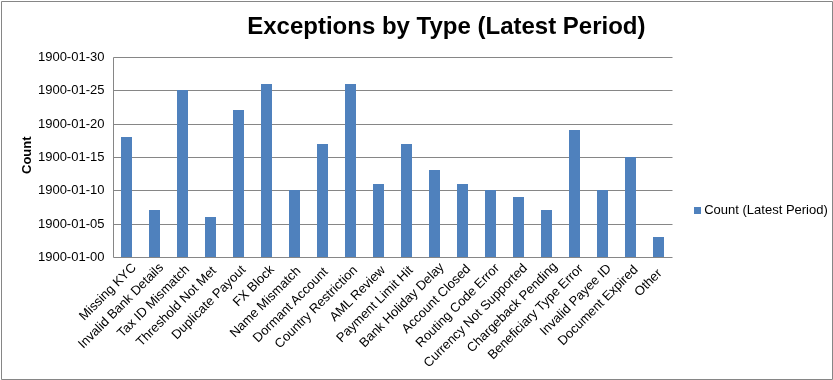
| Exceptions – Root Cause | The sheet is equipped with a Pareto chart that explains which 20% of problems cause 80% of the issues, the person responsible for it, when it will be fixed and its current status. |
| Disputes – Cohort & Aging | The sheet groups disputes by cohorts, tracks how many were solved within the SLA, how many took longer time than prescribed, and the fixes which were used. |
| Reversals & Chargebacks | Monitors complaints over time and addresses the ones which have been unresolved. |
| 13-Week Cash Flow | You get to compare weekly payouts against collections which will show your net cash change, total running balance. It ensures whether it aligns with the liquidity. |
| FX Exposure & Hedging | When you are paid in various currencies in your business, this indicates the degree to which you are at risk in the event of a fluctuation in the exchange rates. |
| Vendor Performance | Provides your PSPs/e-wallets which cover components such as fees, country coverage, settlement speed, API, SLA, uptime, fraud tool, and tax support. |
| Scenario Planner | Allows comparison of various configurations, for example, “How would it work to pay weekly vs monthly?” or “How do we save 10% in place of 5%?” |

How to begin assessing your pay-cycle with the scorecard: In 3 simple steps
Set Assumptions (cycle, cut-off, pay-day, holdback, clawback, and SLA): Set up your payroll regulations. When and where can the brand make payments, what should be withheld, when do you get paid to ensure payment regularity, what time is your payroll cycle starting, and when is it ending.
Enter your last 12-20 cycles into Data Inputs: Include recent payroll or payment data to examine trends, identify errors, and verify existing cycle accuracy.
Read the Dashboard and drill down to Exceptions, Disputes, or Cash-flow: Examine major indicators, recognize any abnormalities or payment disagreements, and evaluate the impact of these on the overall cash flow.
Share the PPT in your ops call: Have impactful operations meeting with analysis of current scenario and discoveries that bring the team to the same page and make decisions that are well informed.
Included downloads: The given files (reports or templates) will be used to facilitate analysis, reporting, and communication.
Why is the scorecard deemed to be effective
Decision-first design: Each tab leads to major pay-cycle choices such as timing, cut-offs, and holdbacks to enable you to take immediate action and understand what you are doing.
Actionable thresholds: The smart traffic lights will show in real-time what is rated as good and bad so that the group knows what to concentrate on (e.g., On-time ≥98% green; Dispute ≤0.5% green).
Cash-conscious: It establishes when the payments are to be made and how they will affect the actual cash expenses, which will help you to ensure that there is liquidity.
Trust-aware: The dissatisfaction score is applied to show the dissatisfaction before it creates greater issues.
Ready to meet: Exportable PPT in one-click provides you with a clean, executive-friendly slide to present effectively at every weekly review.
Major decisions this scorecard assists you to make
Which cycle cadence (weekly, biweekly, monthly, or hybrid) best fits your order patterns and regions?
What should you tweak in cut-off and pay-day to increase on-time % in the absence of reversals?
Which holdback or clawback level has the lowest risk at a reasonable expense of funds?
How should we tighten the SLA/communications to reduce the number of disputes and exceptions?
Click to download the free Pay-Cycle Health Scorecard template to monitor expenses and assess potential risks.
*No email required.
Who is going to benefit most from this template
CFO and COO attempting to balance between trust, speed, and liquidity: The COO and CFO use the scorecard to make sure that the payments are fast and reliable and do not harm the cash flow. They create a balance between paying people on time (trust and speed) and adequate funds needed to cover the daily needs of the company (liquidity).
Finance Ops or Compensation running the pay engine on a daily basis: The teams are accountable for the day-to-day payment of physical processing. They type in the data, check the amounts, and labor as per the set payment period. The scorecard would help them to find out the mistakes or delays or cost issues and increase to more serious issues.
Customer Support & Compliance reducing SLA violations and disputes: The scorecard helps the Customer Support and Compliance staff track complaints, disputes, and missed deadlines. It enables them to resolve the issues within a short period and make sure that the company follows all the service level agreements (SLAs).
Are you still stuck with deciding upon the type of pay-cycle, finding it difficult to track the funds that go in and out? Call our Experts to put your doubts at rest and to learn how our free pay-cycle scorecard will benefit you.
Download a US-market ready Pay-Cycle Health Scorecard Template to ensure your pay-cycle plan is the right fit and sustainable.
*No email required.
Note: Excel or Google Sheets Scorecard comprises a full model with tabs, formulas, traffic lights, and trends.