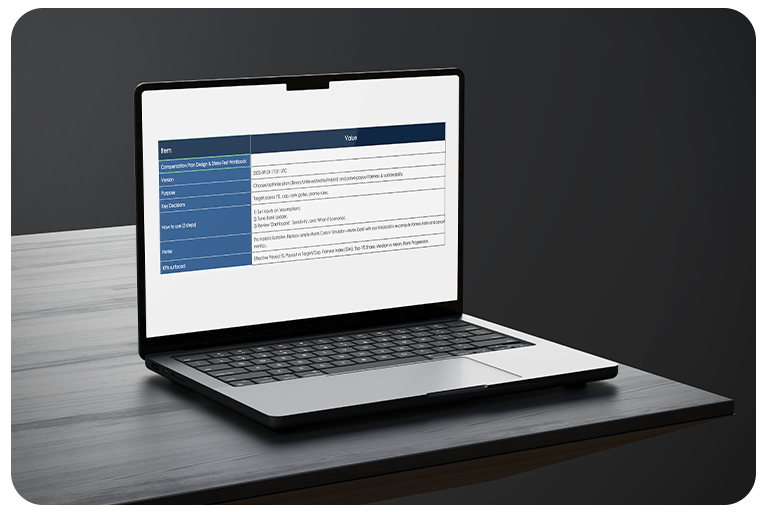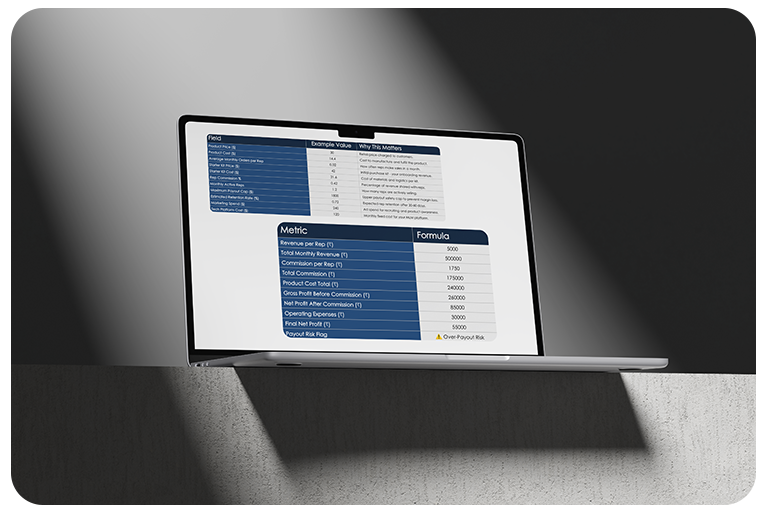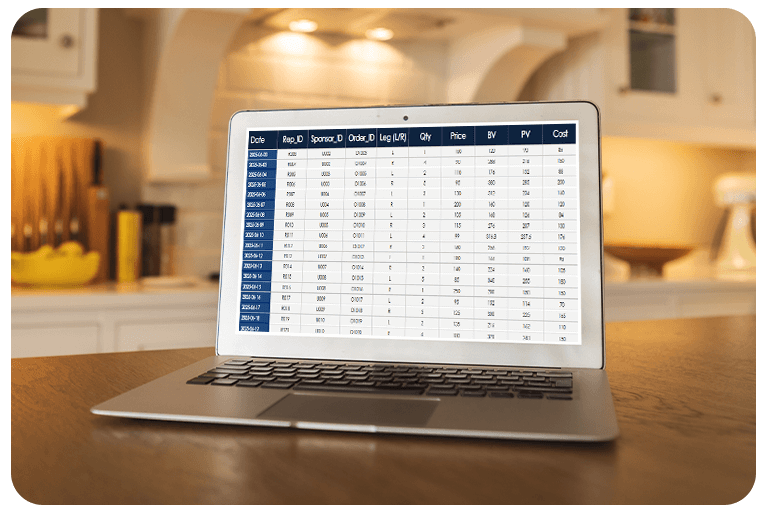

















Download a Free Compensation Plan Stress-Test Simulator
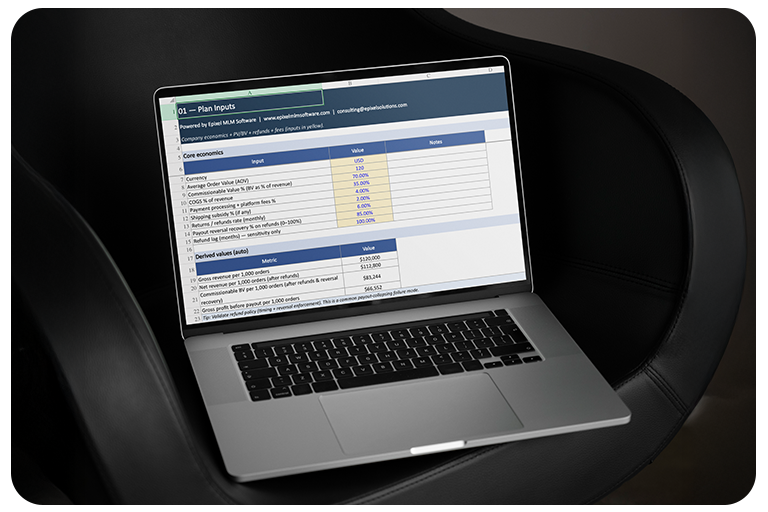
Most MLM compensation plans look good on paper, but when real humans start using them, problems start appearing. You may not know about the hidden risks until a payout blowup hits due to a sudden spike in volumes, rise in refunds, increase in the number of inactive distributors, and bonuses exceed payout limits.
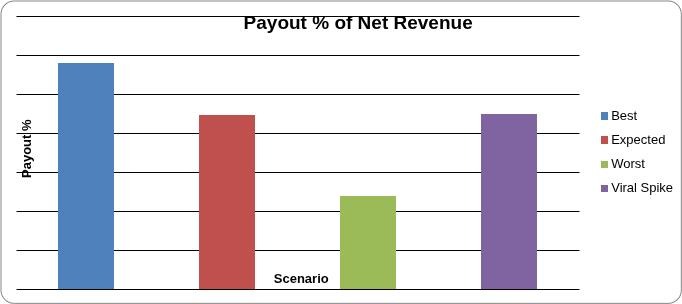
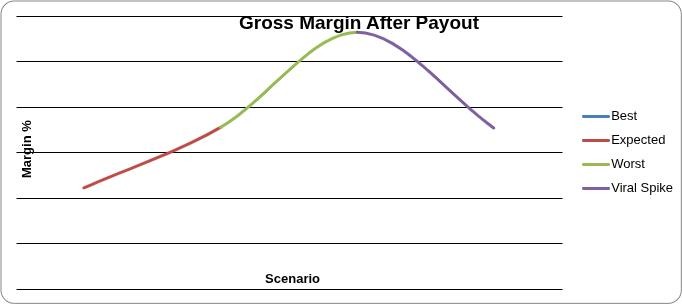
This compensation plan stress-test simulator is created for finance teams to test their proposed plan in different real-world scenarios to assess its durability and fragility. The advantageous part is, it works for all types of plans, no matter whether it's unilevel or binary and is compatible with all MLM software including Epixel MLM Software.
Find out if your compensation plan is profitable in the long run or would collapse as the company grows and there is a rise in recruitment.
*No email required.
What’s inside the free Compensation Plan Stress-Test Simulator
| Tab | Purpose |
|---|---|
| 00_README | A quick start page explaining how to use the template step-by-step. It also lets you set safety limits like maximum payout %, minimum profit margin, and acceptable volatility. Think of it as the rulebook that protects the plan before any numbers are entered. |
| 01_Plan_Inputs | Here you enter the basic business economics such as product price, margins, costs, shipping support, and refund behavior. It defines the financial reality the plan must operate within. All later calculations depend on these inputs being accurate. |
| 02_Ranks | This tab defines the hierarchy structure—ranks, qualification conditions, required volume, and active legs. It also sets who qualifies for payouts and how compression works. Essentially it models how distributors progress in the network. |
| 03_Payout_Components | Configure each bonus or commission type, including its base, rate, and limits. You can add caps, breakage assumptions, and sensitivity to compression. This is where the earning mechanics of the plan are built. |
| 04_Distribution_Assumptions | Estimates how many people exist at each rank and checks if income is concentrated among a few leaders. Uses a concentration measure to identify top-heavy payout risk. Helps predict fairness and long-term sustainability. |
| 05_Scenarios | Tests multiple real-world situations such as best case, expected behavior, worst case abuse, and a sudden growth spike month. Adjusts breakage, compression, and caps to simulate reality. This prepares the company for unpredictable growth patterns. |
| 06_Results | Shows the financial outcomes for every scenario—total payout, profit margin, payout percentage, and concentration levels. Also gives a fragility score to indicate stability. This is the main decision-making output for leadership. |
| 07_Leakage_&_Fragility | Automatically detects problems like overpayment, reversal risk, or unstable incentives. Suggests fixes such as caps, stricter eligibility, or payout smoothing. Helps prevent financial leakage before launch. |
| 08_Charts | Generates simple visual graphs comparing payout and profit across scenarios. These are ready for presentations and board discussions. Makes complex financial results easy to understand quickly. |
What decisions this template improves

There are certain questions which stakeholders ask very often before investing in a company. And this template answers those questions.
Payouts look different for different sizes of companies. Payout looks small for a small company as only a few people qualify for bonuses while that's not the reality in case of large companies. This template tests the compensation plan at different company sizes and concludes whether the plan brings a safe long-term profit or is a financial failure.
The template tests the plan in a month that brings high growth to see how the plan works out in case of a sudden increase in payout percentages and whether the company survives the rapid increase in recruitment. With more recruitment, fast-start bonuses get activated more frequently, and many ranks are achieved quickly.
It calculates the payout leakage. Sometimes customers request a refund or return after the product is purchased, but the commission will already be paid to the distributors. In such cases, the company permanently loses money. The template reveals the actual profit after all the return and refund scenarios and the hidden losses that went unnoticed.
Companies can end up overpaying a few top leaders. This results in instability and an increase in the number of complaints from other distributors. The template shows stable earnings and where the earnings are more concentrated.
It is important to analyze at an early stage itself which component in the plan is causing financial danger. It could be matching bonuses, leadership pools, or fast start bonuses. This template reveals where you tighten the caps so that chances for a financial failure will be lowered.
Who will benefit most from this template?
Founders and CEOs: These are people who want to ensure that the plan does not just look good in theory but is actually sustainable. The template helps them calculate all the possible scenarios prior to launching or re-launching and it gives them a final green light to go ahead with it.
CFOs or Finance Heads: When the plan does not mathematically add up, there will be endless complaints from distributors regarding the malfunctioning of the commission plan. Auditing authorities will question the credibility of the plan. This template calculates actual payout exposure, tests the plan in worst case scenarios, and creates logic that is defensible during audits.
Comp plan consultants: The compensation plan stress-test supports and validates the plans proposed by consultants to their clients. It identifies the hidden risks and ensures that the template is safe, logical, not just creative.
COOs or Operations leaders: Operations leaders often worry about refunds, cancellation, reversals, and payout corrections. The template will define all of this, and daily operations will go from chaotic to organized with the use of this template.
CIO, CTO and product teams: The template translates business logic into code. This helps the technical teams to turn unclear conditions into systemic rules and aligns the payout engine with the proposed plan.
Click to download the free compensation plan stress-test simulator to identify the hidden financial dangers in your compensation plan.
*No email required.
Why this works
It is built to follow a financial safety-first approach. It calculates the maximum payout limit first, predicts what happens after the company scales and leadership ranks grow. So, the plan is designed and approved only once these safety risks are addressed.
The template gives you a sneak peek into all the possible future scenarios. It tests the model and takes you through all the scenarios which include best case, expected case, worst case, and viral spike. This helps the company to be prepared in all scenarios and won't face any surprising disappointments.
There are hidden risks which the company often catches one year later, whereas an organized template detects at a very early stage. It can be customers returning the product once commission is paid. This creates permanent loss of money for the company. Pitfalls can also appear in the form of more distributors achieving the rank qualifications which leads to an increase in payout. Such issues demand a high cash flow from the company and to prevent it, the template helps them plan a healthy compensation plan.
Instead of producing multiple pages of compensation documents, this template provides a structured report with graphs, diagrams, and future risks to present it to the board. This makes the vendor selection easy, helps implement the rules efficiently.
If you’re evaluating platforms or migrating payouts, use this workbook as your plan readiness checklist. Epixel’s team can help map each component into the payout engine, validate edge cases, and ensure your plan is scalable and compliant.
Download a US-market ready Compensation Plan Stress-Test Template to test the plan in all types of scenarios to check whether the plan is safe and profitable in long-term.
*No email required.